
Trader Joe’s Dried California Persimmons
Posted: May 7, 2013 Filed under: Trader Joe's Brand, Vegan, Vegetarian | Tags: Dried Fruit, persimmon 6 Comments
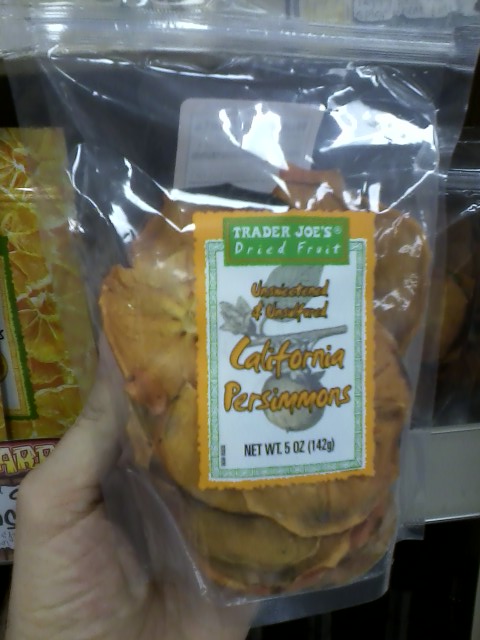
Sitting there in plane view, like it has nothing to hide. But who are you really, persimmon?
Ah yes, the persimmon. One of those strange liminal fruits of the world that, like the lychee or jack fruit, is known by some, occasionally encountered, but largely a mystery, a stranger lurking on the edges on the far edge of the apples and bananas. Where do you come from, Trader Joe’s Dried Persimmons? What do you want with us?
You are liable to encounter a persimmon anywhere in the world, they are cultivated in narrow geographical regions from Asia, through the Middle East, into south America, and even – oddly enough – in Indiana. The most common type of persimmon, in it’s natural state, looks like a pallet-swapped tomato – orange and brown instead of red and green. They are sweet, with an almost pumpkin like taste an a texture somewhere between an apple and a firm tomato.
All of this matter because Trader Joe’s Dried Persimmons are simply that – dried persimmons, proud members of the one ingredient club (Ingredient: persimmons). On top of this, the persimmons are both unsulfured (adding sulfur dioxide extends the shelf life of dried fruit, but causes allergic reactions in some individuals) and unsweetened. We’ve seen Trader Joe’s love of the unsulfured, dried fruit before , following their urge to provide dried fruit that are as healthy and as close to nature as possible.
All of which means they;re good – chewy, pliable, quarter inch thick slices of a simple tasty fruit. It also means they’re hard to recommend to anyone who hasn’t ever tried persimmon before. If you have in fact bitten into the flesh of the tender persimmon, they you know if you’ll like these or not out the gate. It’s more of the same, the tastes intact, the meats merely drier.
If, on the other hand, you’ve never had a persimmon, my job becomes tougher. I suppose I could just shrug my shoulders and write this off as a boolenean “You either get it or you don’t” situation, but instead I’ll take the hard road and attempt to describe, Mary Super Scientist-style, the nature of a percept of which you have no experience. Now please, allow me to get my poet on:
Autumn. The persimmon, hanging heavy and orange on a lone dark branch, is an autumn fruit. Dense with itself it hangs, plucking free into your hand with a pleasant heft. The skin is firm and taut, tight-packed with the fruit’s juicy flesh, juicy but not overflowing, not sopping, merely permeated with the sweet, wet juices. A sweetness that is all it’s own, a taste which is unlike any other fruit. Not the high, bright, intense sweetness of cherries or apples, but a low, earthy sweetness, a mild, slow sweetness like a toned-down brown sugar, not a clean, clear touch on the tongue, but a lingering, mealy embrace – a pliable laying upon the tongue like the flesh of the banana. Your teeth pierce the skin, and at the first, at the very front of the bite, it is not sweet at all, but rich like a squash, like a ripe, late season pumpkin, and only then, only after you know it as that, comes the the mild slow sweetness and the moist, chewy flesh.
There you are. That’s the best I’ve got. If that sounds like the taste for you, by all means go ahead and pick up some persimmon, either dried or otherwise. If you’ve tired persimmon before and now regard me as an idiot, please post your more accurate description in the comments below.
The Breakdown:
Would I recommend it: Yes, if you like persimmons.
Would I Buy it Again: It’s nice, but my need for persimmons is not that high.
Final Synopsis: If you think regular persimmons are too moist for your purposes, this is the product for you.
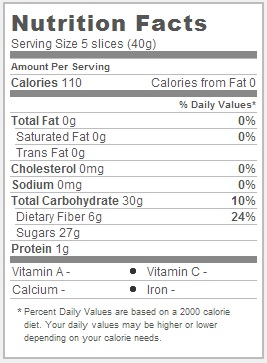
Trader Joe’s Dried Persimmon – Nutritional Information
Trader Joe’s Cultured Coconut Milk – (Blueberry & Vanilla Flavors)
Posted: May 2, 2013 Filed under: Blueberry, Coconut, Kosher, Trader Joe's Brand, Vanilla, Vegan, Vegetarian, Yogurt | Tags: Cultured Coconut Milk, Yogurt Substitute 2 Comments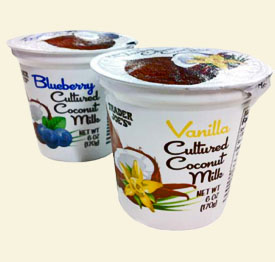
Cultured coconut milk, not yogurt. How could you even begin to confuse the two?
As you may be aware, I have a thing for coconut milk. Maybe not a well thought through thing, but definitely a thing. Basically, if something is made of coconut milk, I go “Wuh? Gimme, somma dat!”
Thus picking up Trader Joe’s Cultured Coconut Milk in blueberry and vanilla flavors was an automatic grab for me. Coconut milk yogurt, awesome, gimme sommma dat. It wasn’t until later that day, as I was unpacking my bags, when the words on the label really sank in. Cultured coconut milk. Not coconut-blueberry flavored yogurt, in fact not even yogurt at all – but a blueberry yogurt substitute made from coconut milk. A vegan, kosher alternative to your dairy product breakfast. Now this was intriguing. Obviously the world is full of human beings, many of them wonderful human beings, who elect not to eat dairy products for a variety of reasons. Nevertheless, the hankering for dairy products persists – an itch that one perpetually hopes to have satisfactorily scratched by innovative new products such as this one. Not an issue I personally have, but one that intrigues me none the less.
The first question, of course, is does this stuff taste like coconut?
No it does not, not at all. No more than your pot of Dannon tastes like milk. The coconut milk base here is effective obscured and overridden by the “yogurting” process, a process that is scientifically not actually referred to as “yogurting”, but which in this case seems to involve a great deal of flavorless seaweed extracts (our old friends agar and carrageenan among them), and some industrious bacteria.
A second question arrives hot on the heels of the first – how much like regular yogurt is this cultured coconut milk? Not more than a close miss, actually. Coconut milk “yogurt” falls squarely into the imperfect facsimile camp, alongside such not-quite-there simulacra as Tofurkey, Silk, and Fakon. Simply put, you won’t mistake this cultured plant fluid for Yoplait.
That said, Trader Joe’s does score points in two important arena. One, it doesn’t violently merge two words into a terrible vegetarian pun (“cocogurt”, perhaps), and two, cultured coconut milk tastes pretty good in its own right. Taken as a dairy yogurt supplement coconut milk yogurt doesn’t quite hit the mark, but taken as a new sort of breakfast item it’s not bad at all.
Trader Joe’s Cultured Coconut Milk differs from dairy yogurt in two chief ways – it’s much looser, fluidic almost to the point that threatens to spill from your spoon. However, it’s also strangely creamier than other yogurts, with an underlying velvety smoothness that coats your tongue in pleasant way.
The strength of this yogurt substitute depends almost totally on your enjoyment of this novel texture. Taste-wise the coconut milk culture tastes fine – the blueberry tastes like yogurt blueberry and the vanilla tastes like yogurt vanilla. Not much news there. Being able to enjoy the coconut milk culture is simply a matter of being okay with a loose, velvety yogurt over a firmer, less smooth one.
I’d be a convert, honestly, if it wasn’t for one thing. Quickly scroll down and check out the protein content – a single gram. Not much protein in those coconuts, evidently.
The main reason I turn to yogurt for my sustenance in the mornings instead of, say, a bagel or muffin, is because of the aura of healthiness surrounding the concept of yogurt. There might be just as much sugar in a little pot of Yoplait (27 grams) as there is in a whole donuts but yogurt has protein, dammit! That has to count for something. Trader Joe’s Coconut Milk Culture has 20 grams of sugar in it per serving, a considerable payload in it’s own right. Take the protein out of the equation and all you’re left doing is slurping up a sweet, loose paste of dubious nutritional value.
Breakdown
Would I Recommend it: Tailor made form my vegan-Hasidic friend, less compelling for everyone else.
Would I Buy It Again: As an experiment for a smoothie base, maybe, but probably not.
Final Synopsis: An intriguing yogurt alternative, but no protein and plenty of sugar ultimately make it less than desirable.
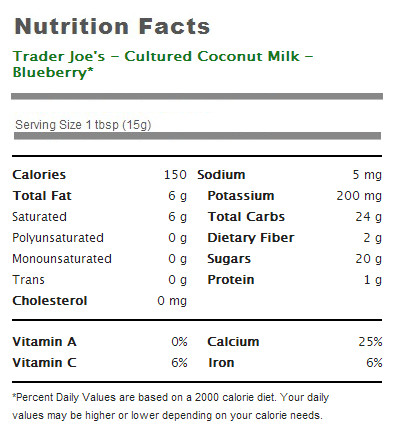
Trader Joe’s Coconut Milk Culture (Blueberry) – Nutritional Information
Trader Jose’s Vegetable Stuffed Poblano Peppers
Posted: April 30, 2013 Filed under: Frozen Food, Poblano, Trader Joe's Brand, Vegetarian | Tags: chile rellano 2 Comments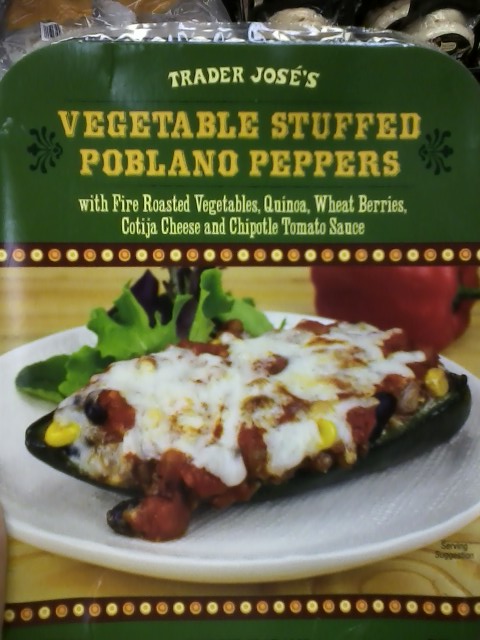
Stuffing those veggies inot more veggies. Doing it.
Occasionally I sit at the table gnashing my teeth and staring balefully at a plate of vegetables. My complaint, I think, is a common one – there simply are not enough vegetables in my vegetables. I, and no doubt you, will be relieved to discover that Trader Joe’s has taken a direct approach to resolving this problem by splitting some poblano peppers open and stuffing them to over flowing with corn, beans, wheat berries, quinoa (and a bit of cheese) in Trader Jose’s Vegetable Stuffed Poblano Peppers.
Essentially we are dealing with a chile rellano made with more veggies instead of meat. Why this rellano like product, not even labeled as such, is handled under the Trader Jose’s label while this one is not shall remain a mystery for all time – knowable only to the augerers in Trader Joe’s occultism department.
This veg-and-cheese medley makes for a tasty filling and manages to avoid the heavy lingering vegetable aftertaste common to other veggie-only dishes. This is notable given that the veggies in question are massive, whole kernels of corn and insolent, lounging beans – an almost aggressively vegetarian dish showing off its full vegetable pedigree on its face. That said, the strongest taste is that of the meaty, thick-skinned poblano peppers that require a knife to saw through. The poblanos have lost much of the fire they pack while raw but not all of it, making this a mild dish with a faint edge of tongue-tingling heat.
I microwaved my Vegetable Stuffed Poblano Peppers in leiu of the 25 minute oven prep, and found that the peppers came out somewhat tough and resistant – far from the tender bell pepper skin of Trader Joe’s Stuffed Peppers with Seasoned Turkey and Rice. Worse, the poblanos were laced through with a bitter tinge, a common feature of poblano’s that have been overcooked. Was this my fault? Perhaps, but I adhered to TJ’s box-side directions so I’m going to pass the buck on to them.
A final intriguing touch is the addition of wheat berries and quinoa in the stuffed peppers – two quasi-grains not commonly associated with Mexican cuisine. I wrote about these trendy, health alternatives to other grains here. In the stuffed peppers their presence is largely undetectable, masked by the other stronger tastes, but lending a pleasant quality to the texture of the sauce.
I mentioned Trader Joe’s Turkey and Rice Stuffed Peppers already, and I can’t help but comparing this dish with that one overall. Do Trader Joe’s Vegetable Stuffed Poblano Peppers stand a chance of replacing this favorite of mine? By no means, the tender, savory, seasoned turkey stuffed peppers beat this newcomer across the board. A decent stuffed-pepper stand-in for the vegetarian crowd perhaps, if they found this one too cheesy, but no match for taste and texture of the stuffed red peppers.
The Breakdown
Would I Recommend It: To vegetarians in need of a hearty stuffed pepper only.
Would I buy it again: Almost certainly not.
Final Synopsis: A vegetarian-friendly chile rellano that’s basically mediocre.
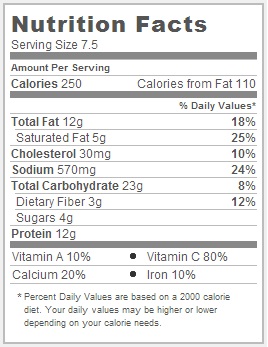
Trader Jose’s Vegetable Stuffed Poblano Peppers Nutritional Information
Trader Joe’s Chile Rellano
Posted: April 23, 2013 Filed under: Cheese, Frozen Food, Pepper, Poblano, Trader Joe's Brand, Vegetarian | Tags: cheddar, monterey jack, poblano pepper 1 Comment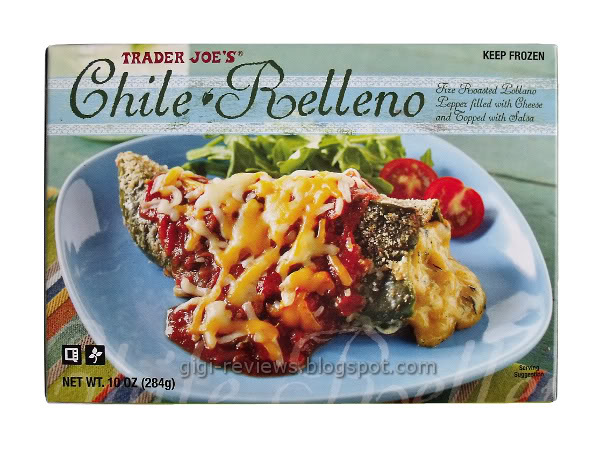
The tube of cheese in question.
Once again, I am shocked that Trader Joe’s Chile Rellano is not on the Trader Jose label. What’s the point of positing the existence of a Hispanic doppelganger if you’re not going to ham-handedly slap him on all your Spanish-inspired cuisine?
For that matter, why have a Trader Jose, a Trader Giotto, a Trader Josef and so on, but not a Korean Trader Jae, an Egyptian Trader Jahi, or a Thai Trader Jayavarman? Why the narrow window of ethno-specificity Trader Joe’s? Edward Said called, he wants to know where you got your Orientalism.
In any case, I better start off this review by disclosing that I’m not really all that into chile rellanos. My list of favorite Mexican food looks like this:
Table 1-1: Mexican Food Preference Chart
- Smothered/”Wet” Burritos
- Fish Tacos (soft)
- Nachos (supreme or ultimate)
- Sweet corn cake mash
- Huraches
As you can see, chile rellanos don’t even crack the top 5, so TJ’s was already embarking on an uphill battle when they created this product then let me go home with it. Strike 1 and 2, Trader Joe’s. Dubious but willing, I tucked in.
The Trader Joe’s Chile Rellano is a roasted poblano pepper, nice and mild, stuffed with monterey jack, slathered in spicy tomato salsa, dusted with bread crumbs and topped with cheddar. When that much melted cheese comes into play, it’s hard to make an unpalatable dish – and as you might imagine these rellanos go down easy.
While most rellanos contain meat of some sort, take note that this one is a vegetarian dish, meaning it is little more than a meat-free, tube of cheese.
This is not necessarily a bad thing, especially if you’re a vegetarian looking for sustenance amid the barrens of the modern grocery store. If you’re looking for that meat free Mexican food fix, here you are. The salsa is admirably spicy, delivering a short sharp burn with each bite, and the roasted pepper is toothsome, if somewhat tough to cut. The vegetarian rellano also boosts a surprisingly high protein profile, 22 grams to the serving, which might give you some sense of how much cheese we’re talking about here.
For my part, I found the meat-less rellano less than filling. As a component to a larger Mexican dish it would certainly be more effective – as plate compatriot to an enchilada, perhaps, or a taco. However, if I’m going to ingest that much straight up cheese I have other ways I’d prefer to go about it. (See table 1-1).
The Breakdown
Would I Recommend It: To Mexican craving vegetarians, no one else.
Would I buy it again: I don’t see it happening.
Final Synopsis: This cheesy pepper is alright, but nothing special.
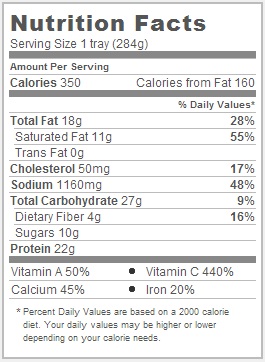
Trader Joe’s Chile Rellano – Nutritional Information
Trader Joe’s Sunflower Seed Butter
Posted: April 4, 2013 Filed under: Condiments, Nuts, Trader Joe's Brand, Vegetarian | Tags: sunflower seed 11 Comments
About a hundred million sunflower seeds, right there.
We’ve dipped a toe into the wild, wondrous world of non-standard spreads and emollients before, with universally positive results. Let us now turn our discerning gaze to that strange lurker on the peanut butter rack – Trader Joe’s Sunflower Seed Butter.
Here we have a weird and unusual spread. Almond pastes and hazelnut creams have become, if not common, at least wider known in recent years – earning a reputation for packing a delicious punch that belies their simple parts. Sunflower seed butter, on the other hand, is an item I’ve only encountered on the far left hand side of Trader Joe’s shelves, huddled off shyly to itself, away from the lime light of the more popular spreads.
I have long been intrigued by this little guy. Was he, like myself, the poor awkward kid in the school yard hiding a heart of gold, or was he a deserving misfit, a mismade troll rightfully shunned into lurking under the bridge in Trader Joe’s sunny world? Is it, in other words, any good?
The answer is not easy to come up with. Trader Joe’s Sunflower Seed Butter isn’t particularly good or bad. It has a very unusual taste that a certain niche audience might enjoy, and which isn’t offensive, but has nothing in particular to recommend it.
It’s hard, at first, to get past the packaging. The label has a cheap, tossed-off look that screams “We don’t care about this product”, a notion that is backed up by the surprisingly flimsy plastic jar it comes in. Twist off the top, and you’ll discover that sunflower seed butter looks almost exactly like your run of the mill creamy PB. Look closer, do you see how, as you tilt the container from side to side, a sheen of separated oil glimmers on the top? You’ll notice as well that the sunflower seed butter flows quite easily, more like an organic, hand-made peanut butter than a Jiff. In fact, the sunflower seed butter is so loose you could almost pour it out, if you wanted to. This is not all bad, as it makes it easy to spread, though it comes at the cost of being somewhat sloppy to ladle with a knife.
The taste is simple and unmistakable – sunflower seeds. This will be your first blush and the long, lingering tail. The immediately taste is almost identical to popping a shelled handful of those tiny, oily seeds into your mouth. After that, as you roll it around on your tongue, the taste become much more mild and somewhat sweeter (thanks, no doubt, to the evaporated cane sugar used as a natural sweetener). While chewing you’d almost swear you were eating ordinary peanut butter – if it wasn’t for a faint hint of that sunflower seed taste lingering just on the peripheral of your tongue. This is all more or less exactly what I expected from a sandwich spread made of sunflower seeds, what surprised me was that once you swallow, the strong, undeniable taste of sunflower seeds will resume. This is practically identical to the aftertaste left in your mouth when you munch on a handful of dry sunflower seeds, and it is not a quick aftertaste either but long and lingering.
Overall it’s not a bad taste or a very good taste – it’s simply a very strong sunflower seed taste. If you have an aversion to peanuts, and therefore peanut butter, you could very well get used to this instead. That said, there isn’t very much to recommend this over any other peanut-variation butter. Like all nut/seed butters it is mostly fat, and it has very nearly the same amount of sugar and carbs as other alternatives. In the end it comes down to how you feel about sunflower seeds. If you love snacking on them, keep them in your kitchen cupboards and car cup holders, this is your dream product.
A final note, sunflower seed butter is very dense compared to most store bought butters. Like organic peanut butter, a very small amount of sunflower seed butter goes a long way – each dab is dense with the crushed essence of a hundred sunflower seed kernels. One small bite and you’re tongue will feel slathered with the paste, resulting in much dog-like chop licking. As a result, one jar of this stuff is going to last you a lot longer than a similar jar of peanut butter, for better or worse.
The Breakdown:
Would I Recommend It: Only if you have a peanut allergy and don’t like almond butter.
Would I Buy It Again: Maybe when this jar runs out, 2 or 3 years down the line.
Final Synopsis: Yes, apparently you can make this, and yes it does taste exactly like you think.
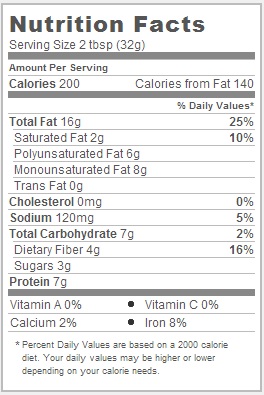
Trader Joe’s Sunflower Seed Butter – Nutrional Information
Trader Joe’s Authentically Korean Seaweed Salad with Spicy Dressing
Posted: March 28, 2013 Filed under: Salad, Trader Joe's Brand, Vegetarian | Tags: Salad, Seaweed 3 Comments
With all your favorite agars and carrageenans!
When it comes to foreign cuisine, no supermarket chain kills it quite like Trader Joe’s. Case in point – Trader Joe’s Seaweed Salad with spicy dressing. We’ve already looked at some of TJ’s bold, if shaky, forays into the Korean kitchen. With this fun spicy salad they can proudly boast that they’ve done something well that no one will appreciate.
Seaweed is not high on the list of most American shoppers, so hat’s off to Trader Joe’s for branching out into the exciting world of undersea vegetation. The history of seaweed cultivation and consumption is as vast and engrossing as the wide Sargasso, and I doubt I can do it justice in this forum. When confronted with a man who just ate a big bowl of limp kelp, the more pressing question of interest is “Does it taste any good?”
Yes, absolutely, this sea weed salad does – if you’re in the market for authentic Korean cuisine. If, instead, you’re looking for a nice, ordinary salad to accompany your casserole, try one of these. If, on the other hand, your on the hunt for an entirely different taste, and texture, sensation to make dinner memorable you couldn’t ask for better.
In a lot of ways Trader Joe’s Seaweed Salad is exactly what you’d expect – a big pile of wet, limp seaweed that smells more than slightly of the sea. In other ways though, this salad might surprise you.
For one, the salad is actually thrown together from a wide variety of seaweeds. Each one brings it’s own texture, color and toothfeel to the dish, seven different types of sea plants go in, from the translucent agar-agar to the bright Carrageenan Yellow.
Eating these fronds is unlike eating any other salad you’ve ever had – large, tender, sometimes slick, sometimes springy textures slide and bounce their way across the mouth with each bite. It doesn’t exactly come packing the taste – few things are as bland and mild and wet seaweed – but what it lacks in taste it makes up for in texture and appearance.
Of course, TJ’s was aware that seaweed needs some help to become tasty, and it provides that help in the form of a monstrously large packet of “salad dressing: that is, essentially, a thick, paste of red hot peppers. Again, kudos to Trader Joe’s for taking the authentically Korean route here. Many mass retailers might have tended toward a milder, more edible dressing, instead TJ’s gives you the full-on Korean restaurant experience.
This is a seriously hot condiment folks, and it’s given to you in a quantity far beyond what you’ll likely need to enjoy your salad. Try a dab of the dressing first before slathering your salad and adjust accordingly. I found about a 1/6th of the packet enough for me – but as we established before, I’m also a bit of a chili wuss.
A final note, making this salad was more fun than it should have been. The meal comes as a freeze-dried thatch that you must dump in a big bow of water and leave to quintuple in size – dinosaur sponge style. It brightened up my day, but then again I am easily amused.
The Breakdown:
Would I Recommend It: Yes, if you think you like seaweed or interesting textures. No to everyone else.
Would I Buy It Again: I could see it happening.
Final Synopsis: This is a great, exciting, interesting seaweed salad but, ultimately, a seaweed salad it remains.

Trader Joe’s Authentically Korean Seaweed Salad with Spicy Dressing – Nutrional Facts
Trader Joe’s Dukkah
Posted: March 26, 2013 Filed under: Condiments, Nuts, Spices, Trader Joe's Brand, Vegetarian 14 Comments
Not just tasty, but a nice executive little package too.
Trader Joe’s Dukkah is a brilliant new introduction to the American food lexicon – a delicious addition to otherwise tasty bread and, more than that, a party in a jar.
Dukkah, or “duqqa” as it is more commonly spelled, is an originally Egyptian side dish made, simply, from a mixture of herbs, nuts and spices for dipping bread in. Word has it that this tasty hors d’oeuvre is all but ubiquitous in Cairo and beyond. The geo-politcal climate being what it is – I’m content to take their word for it.
Dukkah, takes it’s name from the Arabic word for “to pound”, taken from the simple process of making dukkah – just jamming a bunch of tasty spices and nuts together. Traditional dukkahs, as you may expect from such a folk recipe, vary widely in composition. Trader Joe’s take on it is a combination of crush almond, fennel, anise and sesame seeds, plus coriander and salt. I’m sure this may raise some more traditional dukkah lover’s eyebrows, but I couldn’t be happier with this flavorful, exotic mix.
The product label is helpfully emblazoned with the instructions, “Take a hunk of crusty bread, dip it in olive oil and then in DUKKAH”, which was straightforward enough for me. I decided to engaged my jar of dukkah with a loaf of Trader Joe’s Kalamata Olive bread, figuring it was both crusty enough and small enough to fit into my cluttered, tiny kitchen. Also, hey, it’s got olives in it, so yum yum. I prepared a little dish of olive oil, opened my aromatic jar of Egyptian bread topper, and dunked the dukkah out of my bread. Was it good? Friend, it was absolutely great.
Now before I get carried away with unalloyed praise, let’s get the facts straight. A nice crusty bread is damn good in it’s own right, and dunking said bread in some cold-pressed, extra virgin olive oil? You can’t really go wrong. The immediate question is how much enjoyment did the the dukkah lend to this simple banquet? The straight answer is – a great deal.
Dukkah is like having a delicious new tool in your meal tool box. Hit bread with some savory olive oil and that’s good, add to that a splash of tangy balsamic vinegar and that’s better, follow that with some nutty, crunchy, spicy dukkah and you’ve just added a whole new dimension to your meal. And while the taste is nice in and of itself, the crunch is really the selling point here, making a mouthful of sopping bread even more of a pleasure to work on.
That said, this spice mixture might not be for everyone. Anise is a strong flavor, commonly identified with black licorice, and while it’s presence in Trader Joe’s Dukkah is not overwhelming it certainly in noticeable. If you’re interested in giving yourself over to an exotic taste for a new way to enjoy bread, go for the dukkah, but if you’ve never warmed up to black licorice you might consider giving it a miss. Either that, or consider whipping up your own batch. Dukkah amounts to little more than a dry mix of crushed nuts, spices and a little salt. Making your own is as easy as taking a walk down the dry goods aisle of your supermarket. Want to substitute salt and anise for rosemary and black pepper? Why not? You can find one alternate recipe here and others all across the web.
Taste aside, dukkah has a lot to offer. It’s a very easy addition to the table – a casual condiment that can be dabbed in or done without as the mood dictates. It also fits easily into parties, allowing simple, tasty snacking for a whole room with just one simply jar. Of all the wonders of dukkah, most incredible is how many servings you’ll get out of this one $2.99 container. With a price that low, consider throwing one in your cart next time and forgetting about it in the cabinet until company comes over.
The Breakdown:
Would I Recommend It: If you like bread and don’t hate anise, go for it.
Would I Buy It Again: As soon as this jar runs out (so not for a while).
Final Synopsis: Why has it taken me so long to hear of this stuff?
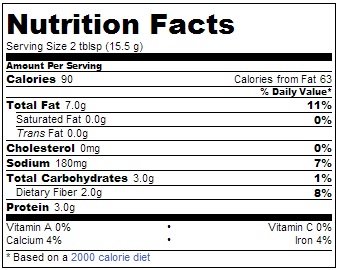
Trader Joe’s Dukkah – Nutrional Facts
Trader Joe’s Roasted Butternut Squash Red Quinoa and Wheat Berry Salad
Posted: March 19, 2013 Filed under: Salad, Trader Joe's Brand, Vegetarian | Tags: arugula, quinoa, red quinoa, wheat berry 9 Comments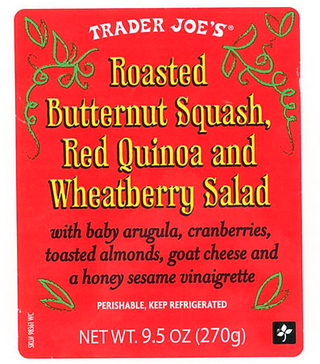
A name that rolls off the tongue.
The full name of this product, listed boldy on its label, is “Trader Joe’s Trader Joe’s Roasted Butternut Squash Red Quinoa and Wheat Berry Salad with Baby Arugula, Cranberries, Toasted Almonds, Goat Cheese and Honey Sesame Vinaigrette”, which also doubles as an exhaustive list of it’s ingredients. I know that Trader Joe’s has a thing for compendious product names, but this one crosses the line from “a mouthful” to “ridiculous”. Honestly though? This time, I don’t even care – because this is the most delicious salad I’ve eaten all year.
I’m an inveterate salad diehard. You can count on me to eat salad, as a meal, between 5 and 8 times a week. Someday they’ll pass a law so you can marry salad, and on that day I’ll finally be a happy man – all the more so because I’ve finally met my fiancee. World, say hello to Mr. and Mrs. Roasted Butternut Squash, Red Quinoa and Wheat Berry Salad.
Every single ingredient in this salad works in sublime harmony with every other ingredient to turn a cheap, $4.99 salad into a taste sensation. I can’t imagine who it was who thought to mix wheat berry with butternut squash et al, but that man earns my heart-felt thanks.
Let’s look at this master piece, shall we? The spiciness of the arugula is balanced nicely by the mild, soft squash, which is supported by the crunch of the red quinoa, the chewiness of the wheat berries, and the sweet tang of the cranberries. And that’s not even getting into the goat cheese, which is a world of flavor in and of itself. Finally, the pairing of the honey sesame vinaigrette is a perfect match for the rest of the mix, neither too sweet nor to vinegary.
Even better, the salad boasts a healthy profile for such a hearty, savory meal – 290 calories (80 from fat), 41 grams of carbs, and 10 grams of protein (without dressing). As always, once the dressing comes on the fat goes up. In order to keep it on the healthy side, consider only going half way with the dressing – the flavors of the salad will more than makeup for the lighter drizzle.
While the nutritional profile may not satisfy a strict dieter, the salad also packs a potent nutritional punch in it’s healthy whole grains – wheat berry and quinoa. Wheat berry is the name for a whole kernel of wheat, minus nothing but the hull. In conventional processing the nutritious germ and endosperm are stripped from a grain of wheat. By leaving the whole grain, the kernel remains packed with fiber, protein, iron, vitamin E and magnesium. Red quinoa is another highly-regarded whole grain (or grain-like seed, to be strictly accurate) that has exploded in popularity recently for it’s high protein, iron and calcium content.
I could go on and on about how much I liked this salad, but this one is better experienced than described. The interplay of the flavors pleases the entire tongue from tip to heel in a way much more expensive restaurant salads often fail to, and takes more risks with it’s composition than most restaurants dare dream of.
That said, my sole reservation is that this may not be the best salad for your fly-by-night salad dabblers. It is a complex salad for people who are tired of simpler concoctions. The appearance of the salad, for example, is either gross or gorgeous depending on where you’re coming from in life. The countless beads of partially sprouted red quinoa spread throughout the salad, along with the mushy wheat berries and soft squash, give the salad a slightly intimidating or off-putting look. My rule of thumb would be this: If you don’t like big gobs of stinky cheese in your salad then steer clear, to everyone else – dive right in.
The Breakdown
Would I Recommend It: To sophisticated adult palettes everywhere.
Would I Buy It Again: I’ll buy it weekly, if they can keep it in stock.
Final Synopsis: The best salad I’ve ever had at Trader Joe’s.
 Eating At Joes
Recent Comments