
Trader Joe’s Carolina Gold Barbeque Sauce
Posted: August 13, 2013 Filed under: Condiments, Sauces, Trader Joe's Brand | Tags: barbecue sauce, south carolina barbecue 3 Comments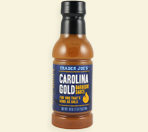
TJ’s has elected to use the non-standard “barbeque” on this bottle. Getting pretty fancy there, Joe.
Hot dang! Now this is some good BBQ sauce. Though I’m sorry to admit it, barbecue has never been my specialty, however, even I can recognize that Trader Joe’s Carolina Gold Barbeque Sauce is top shelf.
If it were possible to reach back through time and space to tweak one aspect of my childhood, I would probably make it so I came from a proud tradition of barbecuing. There is something incredibly appealing to me about the great American BBQ – a potent blend of technical know-how, manliness and cherished family tradition that culminates in a perfect summer day. As it is, I grew up unaware of the heights barbecue can achieve, and of the four great traditions within it. I speak, of course, of the four chief BBQ regions in the US: Memphis, Kansas City, Texas and, of course, the Carolinas.
Books can and have been written on the character of these distinct styles and their various merits. I have no desire to choose sides on that hotly contested subject, (about as much desire to weigh in on that as I do to choose sides in European Football League) so for the purposes of this post we’ll limit ourselves to the qualities of the sauce itself.
TJ’s leaves it at Carolina on the bottle, but those in the know could place this sauce with far more accuracy. The golden color and strong mustard base place it firmly in central South Carolina, in Midlands region. The hankering pig eaters in those towns were the first to really place mustard based BBQ sauces on the map, and have been knocking them out the park ever since. That’s right – mustard. Carolina Gold still incorporates the tomato puree you find in more name brand sauces, but in a much smaller quantity than the rich yellow mustard and vinegar which are the hall-marks of Carolina sauces.
Thanks to this mustard and vinegar base, this sauce tastes like the half-way point between more traditional BBQ sauces and Honey Mustard. The first thing you’ll taste when you take a bite of that pork rib is the zing and tang of a sharp mustard followed by the even sharper vinegar. That’s just first blush, however. The complex medley of tastes you expect from a good barbecue sauce follow right on the tail of that, softening the edge. Unlike some Carolina sauces, Trader Joe’s Carolina Gold is thick, not watery. This might offend some purists, but makes it great for slathering on pork and beef. In fact, the mustard edge of the sauce allows it to pair with far more foods than another barbecue sauce normally could – try using it on your sandwich or veggies.
There is, however, a dark side. This sauce doesn’t taste very sweet outright, like a Kansas City sauce might, but still packs in plenty of sugar. One serving (two tablespoons) contains a whopping 14 grams of sugar. For comparison, Bull’s Eye’s name brand Carolina sauce only weighs in at 11 grams of sugar for the same serving size. For what it’s worth, this sugar isn’t high fructose corn syrup, like it is in so many other name brand barbecue sauces, but made from cane sugar. How much that means to you is a matter of personal taste, for my part I find that processed sugar tends to be processed sugar.
Even with the high sugar content, this sauce still comes out in the black in my books – hands down the best store bought barbeque sauce I’ve ever had.
The Breakdown:
Would I Recommend It: There are probably better small batch BBQ sauces out there, but if you haven’t found them yet go for this one.
Would I Buy It Again: I plan on restocking for next BBQ season.
Final Synopsis: A delicious, mustard-based barbecue sauce that goes well with everything.
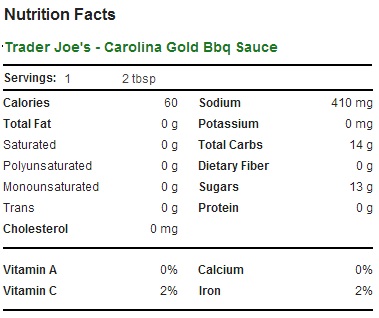
Trader Joe’s Carolina Gold Barbecue Sauce – Nutrition Facts
Trader Joe’s Crunchy Curls – Lentil & Potato Snack
Posted: August 8, 2013 Filed under: Chips, Gluten Free, Snacks, Trader Joe's Brand, Vegan, Vegetarian | Tags: Curlicue, Lentils, Potatoes 11 Comments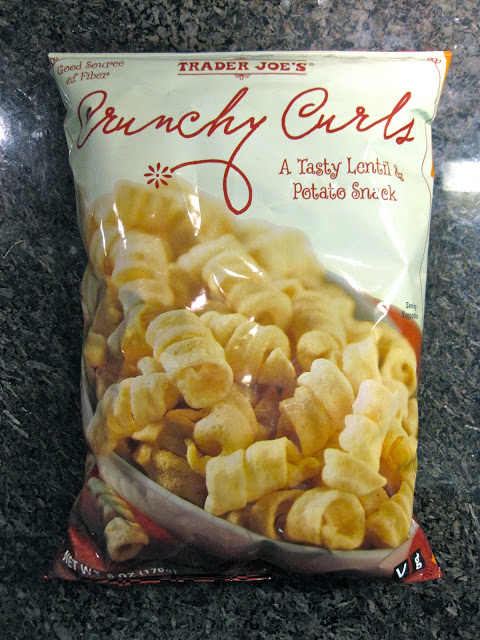
Nothing says snack food like lentils!
If there’s one thing Trader Joe’s is good at, it’s making me do a double take. Case in point, Trader Joe’s Crunchy Curls, a bag of puffed up, curly snack thing that blends seamlessly into the endless wall of junk food until you notice it the bag tacks on “A Tasty Lentil & Potato Snack!”
Double take.
The first thing I’ll say is, I really wish they had made these into chips instead of crunchy spiral snack tubes, because there is no easy way to say “crunchy, spiral snack tube” in the English language. Let’s agree to call them “curlicues” right up front and get on with things.
So, TJ’s, why make a lentil and potato curlicue snack? Are there not plenty of crunchy snack options around? Is America not the land where you can walk down a 60′ long, triple-tiered aisle of snack chips every time you go to the supermarket? The land of the mighty Dorito, undulating Ruffle and tubular Pringle? Do you really think a bland looking, lentil and potato based thing that just happens to be a spiral is going to be able to stand it’s ground in the face of Cheetos, Funyuns, Bugles, Fritos, et al.?
Before we condemn these lentil-based curlicues with a thunderous cry of “Unnecessary!”, let’s look a bit closer. Notice, if you will, that Trader Joe’s Crunchy Curls are both gluten free and vegan. It goes without saying that gluten free, vegan snack foods are few and far between in this world. Try a Google search for the term and have fun choosing from all three options you get. I have vegan friends, I feel for their plight. I know it must be hard to maintain your resolute moral bearing while guys like me stroll around stuffing their mouths with tender beast flesh, sauteed mushrooms, moist, flaky croissants, etc. A gluten-free, vegan snack crunchy, salty snack just answered a lot of people’s prayers.
The big question, of course, is if it’s actually worth buying. Unfortunately, these curlicues left me flat. The taste isn’t the problem – they’re salty enough to scratch that salty food craving but not so salty that you’re rushing for your glass of water. The lentil/potato flavor is palatable if uninteresting with that long, starchy aftertaste – basically similar to munching down on a few Lays at once. The thing that disappointed me was how hard and crunchy the curlicues were. I know “crunchy” is right there in the title, but this snack combines “crunchy” with “hard”. Because of the thickness of each curly cue, each bite is like a fresh assault on a fortified compound. You don’t have to worry about mindlessly munching these down – pop a handful in your mouth and you’ll be busy for a minute or so.
In the end, however, that’s quibbling. If you’re in the market for vegan / gluten-free chips, these are basically fine. You won’t hate them, and they’ll hold up in your hummus dip. If you’re under no such strictures, however, there isn’t much reason to prefer these over anything else in the aisle.
Break Down:
Would I Recommend Them: Only if you’re on a vegan / gluten-free diet.
Would I Buy Them Again: Barring a major lifestyle change, no.
Final Synopsis: A good snack food – for being vegan and gluten-free.
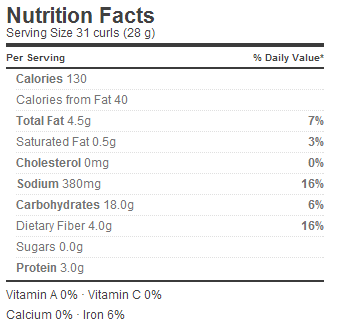
Trader Joe’s Crunchy Curls – Nutrition Facts
Trader Joe’s Black Figs
Posted: August 6, 2013 Filed under: Fig, Fruit, Trader Joe's Brand 3 Comments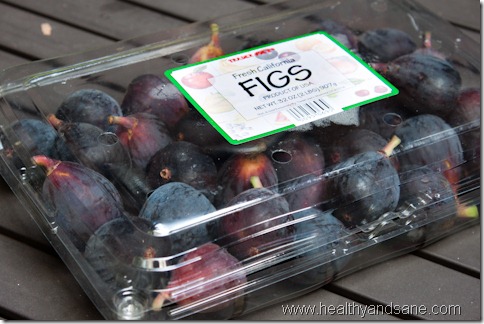
The 11,000 year old, black beauties.
Trader Joe’s Black Figs. They seem interesting, I like the name, but how do you eat them? It’s a question that betrays by ignorance as a novice fig eater. My childhood home had plenty of the mundane fruit – your apples, oranges and bananas, but the wider world of fascinating fruit was unknown to me until adulthood. Certainly not figs. Maybe that’s why I’m so fascinated by exotic plumcots and saturn peaches. Once you figure out what to do with these figs (just put them in your mouth and chew, it turns out), you’ll have to decide if you like sweet, meaty drupes or not. We’ll get to that in a second.
The intriguing thing about fruit, for me, is that it’s always a very interesting food to interface with. Unlike, say, a hamburger, there’s always some sort of trick to eating a fruit, and every fruit’s trick is different. Whether it be natural or cultural, it seems there’s always a technique that makes the eating of any given fruit more fun/tasty/neat, the not knowing of which leaves you facing a messy, unpalatable or even inedible enigma.
The first time I picked up a whole persimmon, I remember just staring at it, turning it over in my hands. It was like suddenly reverting back to the mind set of a monkey, just me and a new piece of food, wondering “Do I peel this or what?”
Of course, somewhere in the world someone knows exactly the best way to eat a persimmon. “Let it soften and use a spoon!” they’re yelling, just like someone knows the best way to peel a banana or how to slice a mango. Nature isn’t spending any money in the Market Research department, standing around and saying, “Yes, but will our target demographic like getting the coconuts open?” Unlike Target or Apple, Nature isn’t bothered by the user interface. It brings its product to market regardless, it’s up to us if we’re going to figure out how to use them.
All of this fig eating ignorance on my part is very ridiculous considering that figs are possibly the first crop ever grown by man – with historical evidence tracing fig cultivation back to 9000 BC – about 11,000 years ago. The fact that we’re still munching on figs nowadays suggests that the fig must be a real crowd pleaser.
The first thing you’ll notice when you get your Trader Joe’s fig is the yielding, fleshy texture of the fruit. This is an ordinary characteristic of ripe figs, but slightly off putting as well. Hold the fig by the stem and bite in – the taste is lusciously sweet, but also complex. The smooth skin, the meaty fruit and the crunchy seeds all combine for a fruit that is completely different from anything I’ve had before. The inside of the fig is a bright, strawberry pink color, which contrasts beautifully with the purple-black exterior. I found I could enjoy a handful of these 2 or 3, but the sticky sweetness and the taste of high dietary fiber (like that of a ripe prune) warned me off of having any more. Overall, it was a good experience, but not one that I’d need to have daily or even weekly. That said, there are a number of interesting ways to incorporate the figs into other foods or cuisines if you don’t necessarily warm up to them as snacks.
Trader Joe’s might have the best suggestion themselves on their website – try cutting a fig in half, adding a few blue cheese crumbles and a touch of honey. Voila, the perfect hors d’oeuvre.
Breakdown:
Would I Recommend Them: Yes, this is an intriguing, tasty and different fruit. If you’ve never had a fig, you should go out and try these.
Would I Buy Them Again: Probably not, except maybe to impress guests.
Final Synopsis: Sweet and fleshy – interesting fruits to shake up your boring fruit bowl.
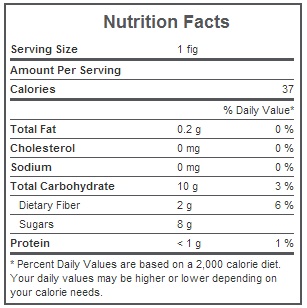
Trader Joe’s Fresh California Black Figs – Nutritional Facts
Trader Joe’s Cold Brew Coffee Concentrate
Posted: August 1, 2013 Filed under: Trader Joe's Brand 38 Comments
Cool, hip packaging and all. Pretty cool Trader Joe’s.
Nice job, once again, Mr. Joe. I might get down on TJ products from time to time, but one thing you can’t accuse them of is being boring. Case-in-point, Trader Joe’s Cold Brew coffee. Yes, this is the recently popularized foodie trend you may have heard of, and yes TJ’s is shamelessly jumping on that bandwagon, but really what’s so bad about that? There’s something cool and exciting about seeing a fancy, gourmand nicety packed up and presented to you with an implicit, sly wink, as if to say “Oh yeah, prepare for your life to get a little cooler.”
So, cold brew coffee is this newish thing where coffee beans are ground up, steeped in water, etc, except no heat is ever used. Basically, you just leave a bunch of coffee grounds in water for 12 hours or so, filter it, then pour into a bottle. What results is a very cool sounding adjective phrase (COLD BREWED!) and a sort of vague curiosity as to why you’d want to bother. Didn’t they have any hot water around? Did someone forget to plug in the coffee maker?
There are, in fact, a number of differences between cold and hot brewed coffee. Two big ones – the first obvious, the second a bit more subtle.
The first and most notable thing is that it’s actually a coffee concentrate. The long brewing time infuses the water to about triple the ordinary strength. That means when you look at the 32 oz bottle Trader Joes’ is peddling, you should imagine a giant 96 oz jug in it’s place – that’s three quarters a gallon of straight java.
The other point of difference has to do with relative acidity. Cold brewing coffee results in a much milder, low-acid version of hot brewed coffee. This makes for a much smoother drink and a cleaner, lighter taste. Although a certain level of cultivated acidity is sought out by some in their coffee blends, it’s in part this very acidity that makes coffee tough of stomachs, harsh on tongues and a bane to tooth enamel. If you have much experience as a coffee drinker, the difference here is immediately noticeable – the cold brewed coffee feels much more pleasant and drinkable. As a fellow who has no truck with acidic coffees, TJ’s cold brew is a welcome relief in this department.
Beyond these two interesting characteristics, cold brewed coffee is basically just the same as hot coffee. Pour some in your morning mug, mix it with water/milk/etc and drink. Don’t get me wrong, the drink is fun and interesting – mixing it up feels like rogue chemistry and the cup is smooth and mellow – but it’s still basically just regular, arabica bean coffee.
The question you’re going to have to ask yourself is, do you need a novel form of coffee in your life? Coffee is a workhorse, coffee gets the job done. It’s your morning slap in the face. It’s appreciated as a refined beverage by the few. Those folks, the collectors of brewing apparatuses, their larders stocked with whole beans, may appreciate this the way a beer enthusiast mulls over the differences between lagers and ales. The rest of us? Perhaps less so.
This is a point that is thrown into high relief by one final point of difference – Trader Joe’s Cold Brew Coffee has a recommend shelf-life of 30 days once the seal is cracked. That means if you plan on drinking three quarts of coffee in the next month, but you don’t have a better way to brew it and/or you collect ways to brew it, this is your drink. To all others, this doesn’t have much to offer you beyond the momentary elation of novelty.
The Breakdown
Would I Recommend It (revised): Yes, to coffee drinkers and non-coffee drinkers alike.
Would I Buy It Again: That’s more coffee than I need in a one month period, so no.
Final Synopsis: Very low acid, but otherwise ordinary, coffee.
****UPDATE:****
This has never happened before, but guys I need to change my opinion on this product.
It’s been three weeks since I first started drinking Trader Joe’s Cold Brew Coffee, and I have to say I’m learning to love it. Every morning these last few weeks I’ve been presented with two options: the hot pot of bubbling coffee on the burner or the cool jug of cold brew in the fridge. Every morning I’ve gone for the cold brew.
I touch on the reason for this in my original post, but I feel the need to highlight it again here. This coffee really is very, very smooth. The acidity is so low, the taste so mild, that even my Joe Lunchpail, coffee-ignorant palette greatly prefers it. Trader Joe’s goes so far as to call their cold brew concentrate “sweet”. That would be stretching the common definition of the word – but in so far as air or fresh water can be sweet, it applies.
If you’ve always found coffee too harsh to enjoy, trying this concentrate my completely turn you around.
Trader Joe’s Tropical Sweetened Matcha Green Tea Mix
Posted: July 30, 2013 Filed under: Drinks, MANGO!, Tea, Trader Joe's Brand | Tags: green tea, matcha, passion fruit 18 Comments
I picked this up and went, “Whaaa?” audibly and entirely involuntarily.
You never know what’s going to sound bizarre but be surprisingly good tasting at TJ’s. Trader Joe’s Tropical Sweetened Matcha Green Tea Mix is not one of those cases. I should have known better, I actually had forewarning – this isn’t the first powdered green tea with mango flavoring I’ve had. My first experience was with Crystal Light brand Green Tea with Mango, that purveyor of powdered drink mixes. Granted, it had no passion fruit, but the concept was the same – a powdered tea mix with certain tropical fruits mixed in. The Crystal Light product, ordinarily a satisfactory brand, was all but undrinkable in this case – a revoltingly heavy mango flavor having its way with an otherwise okay powdered green tea.
Perhaps by including passion fruit TJ’s had hoped to avoid the same fate. Unfortunately, their efforts were in vain. Trader Joe’s Tropical Sweetened Matcha is every bit as repugnant – a terribly mismatched set of flavors putting the nail in the coffin of a perplexing offering.
I think the first question has to be, who in the world’s been asking for this – a big tin of loose, powdered green tea mixed with arbitrary fruit flavoring? It’s the same question I ask myself whenever I order the green tea at Starbucks. “Oh yeah,” I grimace, “They mix mint in with mint.”
Look, green tea is delicious on it’s own, sophisticated and relaxing when served hot, refreshing and invigorating when served over ice, we don’t have to go and mix it with all sorts of other flavors just because we can. It’s a facet of the same madness that compels every sushi place to offer spicy tuna rolls. Guys, straight up fatty tuna is as good as sushi gets – so why is your sushi menu dominated by a dozen variations on minced spicy tuna? Are you all crazy?!
And okay, I’ll grant you that the Starbucks mint and matcha isn’t necessarily the worst thing in the world, it’s just not my cup of tea. If, however, you’re dead set on adding fruit to green tea for some reason, why are we dabbling in such total non-sequitors as mango and passion fruit? Let’s all just be frothright and admit that no one has ever made a good-tasting mango flavor additive. Whether it’s been distilled from the juices or ginned up in a lab, mango flavoring has never worked well as a flavoring for other foods. Just let mango be mango. Muddling the mix, TJ’s throws some in passion fruit flavoring, a fruit that, in a blind taste test, I wouldn’t be able to identify in it’s natural state.
This is a classic example of less being more. Green tea is a great, nuanced, clean taste in it’s own right. It needs to be given room to express itself. Throw in a bunch of flavorings and you end up with a beverage that is passable at best, but never excellent. If you must add a fruit to it, and I recommend against this, then keep it to something equally simple a clean. A hit of strawberry or something, not just a bunch of tropical fruit.
I could go on forever about this product, it perplexes me so. Instead, I’ll just briefly nit-pick a couple more things. One, it comes in a giant tin of loose powder. This is sloppy, lends itself to big messes and benefits no one. I would guess it’s packaged this way because Two, the serving size is a hefty 4 teaspoons per 7 oz cup. That’s not a ridiculous number until you notice that Three, the prime ingredient is sugar, which means this is no health drink lady. They also misuse the word matcha on the package, but really at this point I’m just pooped out.
The Breakdown:
Would I Recommend It: No, it’s just not very good tasting.
Would I Buy It Again: Man, are you clownin’ me?
Final Synopsis: Basing a sweet tea mix around green tea and tropical fruit is a mistake, and people should stop doing it.
Trader Joe’s Bacon and Spinach Salad
Posted: July 25, 2013 Filed under: Bacon, Salad, Spinach, Trader Joe's Brand 3 Comments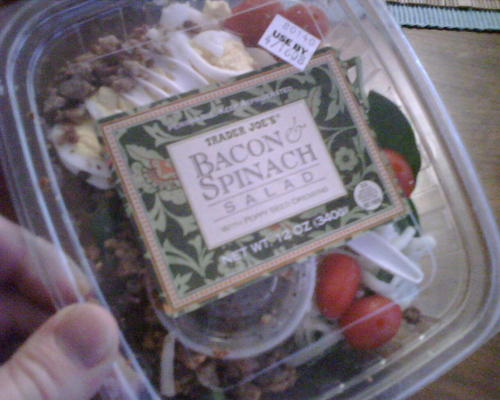
12 ounces of heart-clogging goodness.
When is a salad not a salad? No, that’s not the set up for a hilarious joke – it’s a dead on serious philosophical musing. Undoubtedly there are as many different answers as there are salad lovers on this planet. Some might quibble over the presences of leafy greens, others might argue the necessity of a dressing. For me, it comes down to nutrition.
When a salad is delivering 108% of your daily fat intake in a single serving, that’s a poorly constructed hamburger not a salad. When someone can say to you, “Whoa, buddy, instead of that salad, why don’t you try something healthier. Here, shove these two Big Macs into your mouth at the same time.” That for me is where a salad crosses the threshold into junk food. What I’m saying is, brace yourself for Trader Joe’s Bacon and Spinach Salad.
I bought this salad the other night because I was hungry and had managed to convince myself that, you know, in light of the paleolithic diet, Atkins, etc TJ’s Bacon and Spinach Salad wasn’t actually that bad for me. If you haven’t looked yet, I’m going to direct your eyes to the bottom of this article. Yup, that’s right. Not just 108% of your daily recommended fat, but 105% of your cholesterol, 68% of your sodium, and even some trans fats in there for good measure, all delivered directly to your arteries on a healthy bed of fresh spinach.
Who in their right mind can call this a salad? If they’d stopped at the bacon, that’d be one thing but this salad by no means stops at the bacon. What else is in there?
Well, we’ve got some cherry tomatoes, nice plump and juicy, that’s fine, a whole hard-boiled egg, that’s not too bad, then we have the mozzarella cheese and the poppy seed dressing. I’m not sure which of those chokes me with surprise more. I mean, the mozzarella just seems egregious. We’ve already slathered the spinach with a hefty helping of cured pork belly, bacon that is literally sagging with fat, who was out there was thinking, “This salad just isn’t rich enough. Throw on a bunch of fatty, white cheese!” And, with that in mind, can I just say – poppy seed dressing? Really, Trader Joe’s? On top of everything else, poppy seed? One of the richest, liquid-fat infused dressings on the books? And not even a poppy seed dressing that makes overtures at healthiness, but an oily poppy seed dressing? Honest to god, this poppy seed dressing has a thick layer of oil floating on the surface when you crack it open. I’ve had poppy seed dressings many times before, but never one that comes with its own oil slick.
It’s astounding, readers. This salad is practically a novella about the rage simmering beneath the exterior of one crazed salad designer at Trader Joe’s, a man who has been forced, day after day, to design fresh, light new takes on lemon chicken while his soul within slavers for sticks of butter and pork flesh, a man who, one day, snapped when presented with a bag of broccoli slaw, the levees of his mind giving way to the flood of carnal need, and leapt about ransacking the shelves, tongue hanging out of his mouth, loading up a bed of spinach with his every secret, depraved desire.
Okay, so if you eat this salad everyday your body fat will eventually smother your heart and you will die, on that we can all agree. On the other hand, it’s very tasty. And of course it’s tasty, it’s a pile of fat and salt – it’s incredibly delicious. Pour on the poppy seed dressing, mix up the bacon and cheese and dig in – you’re taste buds will be taken on a wild ride of salty, fatty, meaty tastes. In fact, the most incredible thing about this salad is that it’s actually edible. As anyone who’s had a Big Mac can testify, it’s hard to eat so much fat and salt in one sitting and not leave feeling at least a little ill. For this we can thank the spinach and cherry tomatoes, which provide a clean, light taste counterbalance to the more dominant heavy tastes. In a way, it’s a brilliant solution to the problem of how to eat a bunch of fatty bacon and cheese all at once. If that’s not a problem your trying to solve, then this may not be the salad for you.
The Breakdown
Would I Recommend It: No to salad fans, yes to bacon fans.
Would I Buy It Again: I’m not sure my blood pressure can take it.
Final Synopsis: A novel way to eat a bunch of sloppy bacon.
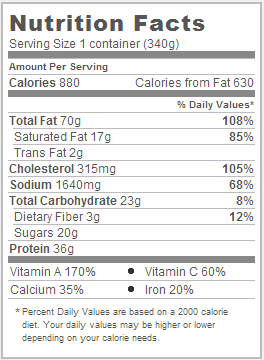
Trader Joe’s Bacon and Spinach Salad – Nutritional Facts
Family Tree Farms Plumogranate Plumcot (Pluot)
Posted: July 22, 2013 Filed under: Fruit | Tags: family tree farms, plumcot, pluot 1 Comment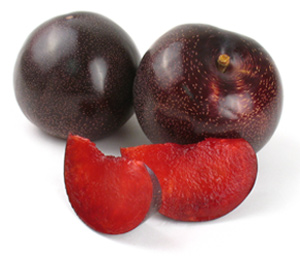
The Plumogranate Plumcot. I’m apologizing to my spell check already.
Trader Joe’s continues to populate their food aisles with the occasional eccentric choice from some 3rd party vendor. So far, with few exceptions, these has failed to entice me with the levels of eccentricity and full out cheekiness that Trader Joe’s brings to their food products, and so I have passed them by with a sniff of my nose. There was no passing up this boggling fruit today. Any food whose name makes me do a double take, then makes me stare at the name as I try to puzzle it out, then makes me doubt my own sanity, gets an in any day.
Plumogranate Plumcots. Plumcots, I suppose I am to take it, of the plumogranate variety. An already twisted noun strapped onto an adjective that might be an out and out act of war on the English language. A plumcot, as you might have experienced at some point in your life, is the result of cross-breeding a plum and an apricot. Alternatively, you may have encountered a pluot, which is the very same thing but which sometimes goes by a different name due to a trademark battle to tedious to get into here.
That’s fine. I’m not happy with people going around, brandishing clumsy, uninspired, fruit-based portmantaus, but that’s the world we live in and I’ve made my peace with it. Plumogranate, on the other hand, is beyond the pall for me. I have a short list of words that I will never ever say out loud, and plumogranate is sitting in fresh ink at the bottom.
I picked up this piece of fruit based on the very exciting assumption that Family Tree Farms had somehow managed to breed a pomegranate with a plum with another plum with an apricot, and were selling them for $0.50 a pop in a big cardboard box over by the dog food. The reality is somewhat of a let down. The plumogranate plumcot is simply a sub-genre of plumcot with ruby red flesh and a very high antioxidant count. (Allegedly, we’re talking quadruple the amount of antioxidants found in a pomegranate, but I have been unable to substantiate this claim, and therefore will not commit it to print.).
So the name is unwieldy, annoying and misleading. The taste, however, is perfectly wonderful. It’s a good fruit that does well on first bite and in the mouth, but also costs considerably more than its basically similar parents. The promise of the plumcot and reason it still exists, is because it combines the smooth, thin skin of the apricot with the chewier, meatier flesh of the plum. Despite the evocation of the pomegranate in the title there is nothing of the tartness of the pomegranate in the fruit. It is sweet and mellow throughout – very sweet actually. Hold one of these close to your nose and inhale, the alluring aroma of complex fructose is not lying to you, it’s sweet. This is a fruit perfect for desert, baked on a grill, juiced with citrus or just eaten raw – if you don’t mind throwing down at fifty cents a piece.
The Breakdown:
Would I Recommend It: Yes, if you’re looking for a sweet summer fruit to slot between the peaches and cherries.
Would I Buy It Again: No. Unless the antioxidant thing is true, this hybrid didn’t stand out enough to replace its parents.
Final Synopsis: A tasty hybrid that costs too much to replace a good plum or apricot.
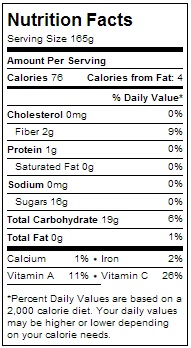
Plumogranate Plumcot – Nutrition Facts (Approximate)
Trader Joe’s Eggplant Garlic Spread
Posted: July 18, 2013 Filed under: Eggplant, Garlic, Spreads, Trader Joe's Brand | Tags: bulgarian, ljutenica 7 Comments
A Bulgarian spread? I’ll allow it, but I think I know some Serbs and Macedonians who will take issue with that.
Continuing my foray into the popular world of Serbian/Bulgarian/Macedonian food stuffs comes Trader Joe’s Eggplant and Garlic Spread. Unlike its very close cousin and shelf neighbor, TJ’s Red Pepper Spread with Eggplant and Garlic, this condiment is hands-down delicious – like a thick, savory pasta sauce made with eggplant rather than tomato.
I got into this already with the craptacular ajvar, and I don’t want to kill it all over agian here, but TJ’s is really wrecking their own house with these name games. These two products, Trader Joe’s Eggplant and Garlic Spread (with peppers) and Trader Joe’s Red Pepper Spread with Eggplant and Garlic, could not be positioned to confuse the casual shopper more. One delicious, one awful, both Bulgarian, of similar packaging and nearly identical names. It’s like having an evil twin and a good twin and naming one George T. Riley and the other George D. Riley. What’s that? Did you say T. Riley? You did? Well too late, because now I’m dead and/or my chicken tastes awful.
Let’s rectify the situation right here – this product, like it’s compatriot, is proudly Bulgarian, and is known in that country as ljutenica. The name might roll off the tongue, but it’s hard to say what exactly a proper ljutenica is supposed to taste like. As with many folk foods (kimchi, etc) it’s taste, consistency and composition varies widely between households. Some are much spicier than cousin ajvar, some sweeter, and so on. This ljutenica is actually milder and more savory. Whatever it was that Trader Joe’s did to its red pepper spread to make it so they avoided it here – nothing harsh or mealy comes through from the garlic or eggplant. Instead, both blend together with the fefferoni pepper to make an intriguing new taste – a full-bodied, broad, tongue-pleasing taste. It is somewhat salty, but not overly so, and very slightly piquant. It worked excellently for me as a condiment for chicken dishes, vegetables and meatballs.
How this ljutenica stacks up against the real Bulgarian stuff I couldn’t venture to say – and if any Eastern Europeans out there want to weigh in please do so – but I personally couldn’t be happier with what I’ve got. If ajvar threatened to turn me against Bulgarian condiments, this spread has rectified all wounds.
The Breakdown
Would I Recommend It: Yes – try it with your chicken or pasta, or slathered on bread and topped with goat cheese.
Would I Buy It Again: I already killed my first jar, so it’s pretty likely I will.
Final Synopsis: A ljutenica that will do you well from Sofia to the Black Sea.
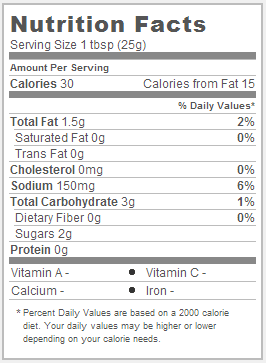
Trader Joe’s Eggplant Garlic Spread – Nutrition Facts
Trader Joe’s Artichoke and Hearts of Palm Salad
Posted: July 16, 2013 Filed under: Artichoke, Heart of Palm, Salad, Trader Joe's Brand Leave a comment
You had me at artichoke.
A heart-based salad? How intriguing, Trader Joe’s. Was this done on a bet? Did some Hawaiian-shirt wearing executive in TJ HQ start shooting off at the mouth about how nobody, but nobody, could make a delicious salad centered on two different types of plant hearts? And then did a little guy (also in a Hawaiian shirt) step forward and go, “I created a salad out of goddamn marinated beets – just watch me.” If this is not what happened, please don’t correct me.
At any rate, Trader Joe’s Heart of Palm and Artichoke Salad feels absolutely decadent. God knows – God almighty in his blue heaven knows – that there’s nothing so good as a nice artichoke heart. To make a salad of them feels almost hubristic. They don’t look like so much – little, uninteresting, drab cubes sitting mundanely on a bed of arugula instead of, as I would have imagined, gleaming with magic sparkles and heavenly rays. A single bite, however, and I was immediately hooked. I didn’t doubt that this would be the case. I mean, it’s goddamn artichoke heart. I’m definitely on the record as a fan of mango, but my mango addiction doesn’t even compare to the pleasure I derive from a properly prepared artichoke.
I think we can all agree that the artichoke is an amazing food. It’s crazy looking as hell, fun to eat, strangely delicious and hides, in its secret, armored center, what might as well be a heart of gold – the absolute intersection of crunchy and succulent. It’s goddamn madness, the kind of food that, if it didn’t exist, Philip K. Dick would have had to drop acid to envision.
Not satisfied with only one heart, Trader Joe’s reaved a second from the palm tree. Heart of palm is less of a palette pleaser than artichoke heart, but has an intriguing taste and decadent history all its own. Also known by the evocative name “Millionaire’s Salad”, the heart of palm was historically harvested from the core of a young coconut palm – killing it outright after the long labor to raise it, and throwing away of the great worth of a mature palm tree. This, being more or less the culinary equivalent to lighting a cigar with a hundred dollar bill, earned the salad it’s name. Nowadays, heart of palm is less extravagantly wasteful – the heart is cut from a different type of palm that creates off shoots, allowing the core to be harvested without killing the whole tree.
The fanciness of the salad is beyond reproach – but does it taste any good? My love of artichoke heart aside I found this salad quite tasty. There are really three big flavors going on – the the succulent crunchiness of the artichoke heart, the marinated zing of the heart of palm and a touch of bitterness from the otherwise mild baby greens. These tastes meld into an enjoyable symphony of tastes, taking your tongue one way one moment and another way the next, but ultimately playing well together. At 7.5 oz, it’s a bit smaller than the average TJ salad, but packs big, novel flavors into it’s small size.
My one big mark against it is the salad dressing – a raspberry vinaigrette that hardly lives up to the name, a thick, opaque pink dressing with the appearance and consistency of Pepto Bismol. This purported vinaigrette packs a fair amount of fat as well, so I substituted Trader Joe’s Light Champagne Vinagarette instead. For a salad already so decadent, I thought a little champagne only a fitting touch.
The Breakdown
Would I Recommend It: Yes. This is a tasty, if unusual, salad.
Would I Buy It Again: It’s got artichoke heart, man. I’ll be back.
Final Synopsis: A salad that manages to stand on it’s novelty.
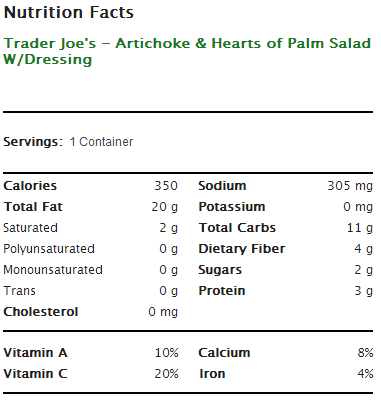
Trader Joe’s Artichoke and Hearts of Palm Salad – Nutrition Facts
Trader Joe’s Indian Fare – Punjab Eggplant
Posted: July 11, 2013 Filed under: Eggplant, Trader Joe's Brand, Vegetables | Tags: Indian 10 Comments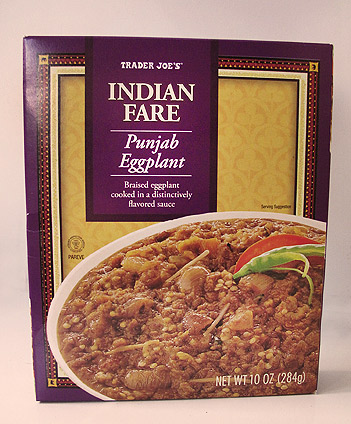
Nothing says Indian food like barbecued eggplant.
Okay, now this confuses me. I’ve made the observation before – but I must again express how perplexed I am by their naming conventions.
Trader Joe’s Cacciatore being placed next to Trader Giotto’s Balsamic Glaze is one thing. But Trader Joe’s Indian Fare Punjab Eggplant? Why delve into such twisted wording when there’s so much existing precedent? Just call it Trader Juhi’s Punjab Eggplant leave it at that – we’ll figure it out.
Sigh. Sorry, but proper applied nomenclature is one of my buttons. Look, let’s just talk about this delicious, savory dish and forget all about it.
Though my haughtier, Indian-cuisine loving friends will probably roast me in a tandoor for saying so, I really liked this dish. Simple, cheap and bursting with flavor – what’s not to like?
This is roasted eggplant done right. Pay attention, you crappy ajvar, you might learn something! I mean let’s take a look at the (typically) awesome ingredient list: four veggies (eggplant, tomatoes, onions and pumpkin), a host of wonderfully Indian spices (coriander, cumin, turmeric, ginger, all that), and not a preservative or artificial color in sight. Of course, there’s the sunflower oil as well, which they go more than a little heavy on. It does nothing to harm the taste – but when 60% of your calories are from fat, it’s time to ease up.
The taste is typically Indian, thanks to the medely of spices listed above, and the eggplant simply lays back and lets them go to work. There isn’t much recognizable left of the eggplant, but that’s okay by me. It might have ended up as a sort of beige mush, but that’s beside the point. The eggplant is there more as a medium for the intriguing aroma and complex taste of the cooking, both of which are entirely enjoyable.
Okay, so maybe it’s lacking a little something in the class department. Food that gets served to you in ready-to-heat Mylar pouches can’t help but make you feel like you’re standing barefoot in your college kitchen again. It’s better then even a TV dinner for dissipating all the day’s successes and making you realize that, oh yeah, you’re just a fat, lonely man.
The other gripe is that, yes, it looks like a big pile of wet cat food when you pour it onto your dish. That would probably be more depressing if it didn’t smell so damn good, redolent of everything you expect Indiant food to be.
Everything else aside, Trader Joe’s Punjab Eggplant wins one award from me – Most Creative Serving Suggestions. Check it out: “Serve with fluffy rice, hot Indian bread, pita – or as a burrito stuffing.”
Burrito stuffing!? Whoever came up with that one, I want to high five you. I live in LA, spiritual heartland of “Let’s mush stuff together and call it fusion” cuisine, and I have not yet seen such a thing. Indian-mexican food? What could be more natural?
Finally, I’m let to wonder, once again, why we can’t figure out how to make delicious (and cheap) meat-free food in the West when the Indians knock it the hell out of the park again and again. Let’s get on the game here vegetarians! Food without meat in it should taste great and cost less. America can do this!
The Breakdown:
Would I Recommend It: Yes, especially to inept cooks like myself.
Would I Buy It Again: That seems pretty likely.
Final Synopsis: Tasty, exotic bachelor food.
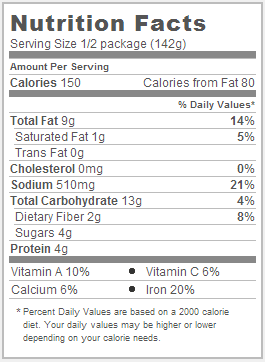
Trader Joe’s Indian Fare – Pujab Eggplant – Nutrition Facts
 Eating At Joes
Recent Comments