
Trader Joe’s Grilled Balsamic Vinegar and Rosemary Chicken
Posted: May 21, 2013 Filed under: Chicken, Rosemary, Trader Joe's Brand, Vinegar | Tags: balsamic vinegar, grilled chicken, rosemary 13 Comments
I know, how can this taste good, right? But it does. It really does.
I should develop a special Star of Excellence to award for the best products at Trader Joe’s. I won’t because, you know, eh – life, but if I did I would not hesitate to award it to Trader Joe’s Grilled Balsamic Vinegar and Rosemary Chicken.
How did they do this?! It’s astounding – there it is, a big hunk of cold chicken sitting in a little cheap, plastic bin sealed by a flimsy bit of plastic, basting in a dubious looking dark fluid, packaged with an actual twig, sitting in the refrigerated section between shapeless strips of sliced turkey and uninspiring lasagnas. How could this thing, this ordinary thing, be very good? Maybe it could be not bad, maybe it could even be decent, but there’s no way it’s going to be exceptional, right?
Goddamit people! This is what I’m tell you – it is exceptional. I don’t know how the mighty food wizards at TJ’s did it again, but they did it again. They took a cheap chunk of sub $5.00 chicken, the same thing you’ve been sold a 1,000 literal times – at grocery stores, in restuarants, in fast food bags, frozen, grilled, broiled, boiled, cubed, chopped and pathetically garnished in a myriad ways. An no one has ever done it right. No one has cared enough to do it right. No CEO has ever thundered, “You know that chicken with the low profit margin, the one people will buy regardless? I want you to work around the clock until it is goddamn delicious!”
TJ is smashing through this wall of mediocre chicken with his own two bare fists, showering the promised land beyond with wobbly breasts. “NOOOOO MOOOOOORE!” he screams, hurling his besprigged packages to the benighted populous. “HAVE GOOOOOOD CHIIIIIIIIICKEN!”
Look, let’s really get into this.
This chicken, a hefty 12 oz breast, is redolent of fragrant rosemary and lightly infused with the delicious tang of a balsamic vinegar marinade. The basic nature of it’s ingredients only serves to magnifies Trader Joe’s own glory and to further rebuke everyone else in the world. This is an easy recipe guys! Everyone could be doing this!
Balsamic vinegar and rosemary have a long history of working together with chicken, and for good reason. Here they bring a nice, considered touch to the dish, balanced in every dimension – neither too acidic or too musty, too watery or too weak. The sauce is so good you’ll be tempted to lap it up after – and it makes the marinated chicken a taste sensation whether it’s eaten cold and dripping in it’s own juices, or hot and sweaty. Oh, and by the way, that twig in there? Well, as you probably guessed, that’s an actual spring of rosemary packaged in for good measure. The country-side notes of the rosemary sing along with the tasty tang of the balsamic in this very low fat, very healthy dish. Like Trader Joe’s Stuffed Red Peppers, I’m drawn back to it time and time again.
In other words, if you’re stuck in a bad chicken rut, you can’t go wrong with this chunk of clucker.
The Breakdown
Would I Recommend It: Yeah, I like this one.
Would I Buy It Again: Weekly.
Final Synopsis: Proof that incredible eats can be found for under $5.00 in a cheap plastic tray.
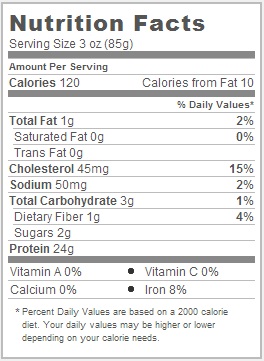
Trader Joe’s Grilled Balsamic Vinegar and Rosemary Chicken – Nutritional Facts
Trader Joe’s Grilled Chicken Cacciatore
Posted: May 16, 2013 Filed under: Chicken, Meat, Trader Joe's Brand | Tags: cacciatore, italian food 2 Comments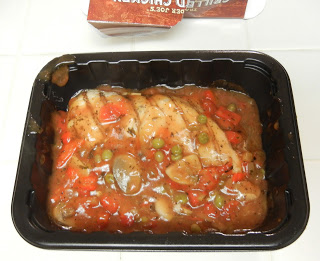
Behold Trader Joe’s Grilled Chicken Cacciatore in all it’s mediocrity!
I have to say, I’m let down by this dish. When I picked up Trader Joe’s Grilled Chicken Cacciatore I was intrigued – it looked good in that picture on the label, all nicely grilled and swimming in a simmering red sauce. The name had a nice ring to it too – cacciatore. It sounds like the ultimate, all purpose Italian word, as if somewhere on the coast between Naples and Florence sits a small town where, even now, a plump matriarchs hang out their windows shouting “Cacciatore!” at the children who run off through the cobbled streets with their soccer balls, laughing “Cacciatore, cacciatore” over and over as they burst past the local pizzeria. “Cacciatore!” shouts the friendly, mustachioed, dough twirling baker.
In actual point of fact, “cacciatore” translates as “hunter”. The connection, allegedly, owes to the fact that it was originally a dish cooked for hunters who returned home without catching any game thus forcing the wife to resort to a chicken stew cooked with the mushrooms he had collected while out in the forest. This origin story is so tortured and improbable that, in light of the insane word histories of linguistics, it is probably true and, moreover, makes a good case for just giving up on language all together.
Romantic notions and etymology aside, I’m a big fan of Italian food – or of any cuisine that makes liberal use of bubbling cheese and fresh baked bread – and was truly excited that Trader Joe’s was offering up a quick-to-prep and very cheap slice of the Italian culinary world. After all, what’s not to like about grilled chicken in a hearty sauce?
Well, in this case, quite a lot.
The cacciatore’s greatest failing, like the acting of Tobey Maguire or McDonald’s, is its mediocrity. The chicken, despite actually appearing to be grilled, is completely unexceptional, while the sauce it’s served in simply tastes so-so. There seems to be an attempt to make up for the generic sauce by providing a huge quantity of it – enough to totally drown your plate in certainly. This tactic fails to salvage the dish. This is a far cry from the hard won excellence of the equally Italian Minestrone – and when it comes to your hard scrabble dinning dollars, there’s nothing to recommend it over the far superior dishes of steamed Hake, stuffed red peppers or even the quinoa and squash salad.
A final note on the preparation. TJ’s suggests two different methods for cooking up your cacciatore – either a quick stint in the microwave, or 25 minutes spent boiling the plastic bag on your stove top. Out of sheer American optimism I decided there must be some hidden merit to the bag-boiling method and undertook it. Rest assured that there is not.
The Breakdown
Would I Recommend It: I would, if there was anything to recommend it by. (Which there isn’t.)
Woudl I Buy It Again: No sir.
Final Synopsis: A plastic-wrapped piece of mediocre chicken in a sea of unexceptional sauce.
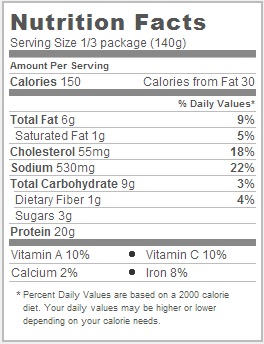
Trader Joe’s Grilled Chicken Cacciatore – Nutritional Facts
Trader Joe’s Chicken Cilantro Mini Wontons
Posted: May 14, 2013 Filed under: Chicken, Frozen Food, Trader Joe's Brand | Tags: cilantro, wonton 1 Comment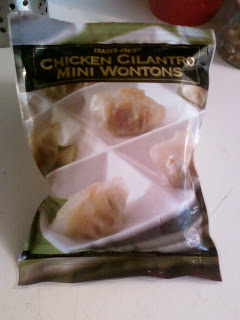
The mini wontons I get, but who has a dish with individual mini compartments for each mini wonton? You’re living in a dream world Trader Joes!
Mini wontons. What a world of astounding technical innovation this is – our computers are becoming increasingly smaller, the pixels in our devices are shrinking to infinitesimal points, and now Trader Joe’s has successfully miniaturized the wonton.
How did they manage the technological breakthrough that is Trader Joe’s Chicken Cilantro Wonton? Microchips? A pact with helpful elves? There’s no telling, but here they are nonetheless. This leaves only one question worth answering: Is it okay to just cavalierly mix cilantro into your Chinese wontons, no matter how small they are?
Actually, there’s nothing new about mini-wontons cooked with cilantro. A recipe very similar to the one Trader Joe’s is peddling can be found throughout Shanghai. As you might expect, different regions and cities throughout China have their own unique spins on the concept of wonton. Although more famous for their massive, tortellini-shaped wontons, China’s largest city also has a long tradition of peppering their soups with handfuls of these tiny, cilantro-seasoned wantons – properly called xiao huntun.
A wonton is, ultimately, a very simple recipe (some meat, some greens, a little seasoning) and lends itself to all sorts of interpretations, so there’s nothing that shocking about cilantro in a wonton. Taste-wise, there isn’t much to write about. Despite the prominent billing of cilantro in the mini-wontons, they don’t actually taste that strongly of cilantro. The potent herb is hidden under the chicken and other seasonings, only showing up later, as a mild aftertaste wafting off the tongue.
This isn’t altogether surprising, seeing that cilantro is listed in nearly the last place on the nutritional label, outdone by bean thread, salt, and green onions. This is not necessarily a bad thing, it’s easy to abuse cilantro and its presence in this dish is subtle and effective, a gentle touch that sets the wontons apart from the potstickers and gyoza of the world – just don’t come crying to it for your cilantro fix.
Cooking the wontons could not be easier. Two minutes in a microwave makes up a big batch, and pan-frying or soup based cooking directions are included as well. Add to this the generous number of wontons included in each bag (about 50) and you’ve got an easy to prepare, tasty Chinese meal for 1-3. If only they’d replace “cilantro” with “shanghai-style”, I’d have nothing to complain about.
The Breakdown
Would I Recommend Them: Easy to prepare and good tasting – definitely.
Would I Buy Them Again: With some Asian stir-fry, this could become a standard Chinese dinner for me.
Final Synopsis: A good wonton, misleadingly named.
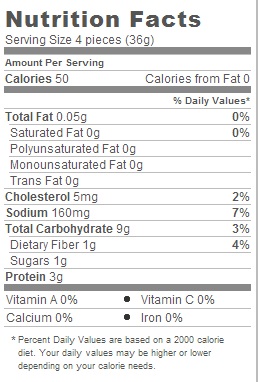
Trader Joe’s Chicken Cilantro Mini Wontons – Nutritional Facts
Trader Joe’s Boysenberry Fruit Bar and Trader Joe’s Apple & Raspberry Fruit Wrap
Posted: May 9, 2013 Filed under: Apple, Boysenberry, Candy, Fruit, Gluten Free, Kids, Raspberry, Snacks, Trader Joe's Brand, Vegan, Vegetarian | Tags: Dried Fruit, Fruit Bar, Fruit Wrap 1 Comment
Boysenberry? Who does boysenberry?
Holy of holy’s folks, it’s a two for one review today.
I, like many Trader Joe’s regulars, have passed up the bracketfuls of dried fruit bars at the checkout lines on countless occasions. Finally, not unlike with their chocolate nibs, the persistence of their offering has succeeded in wearing down my defense, leading me to pick up both the Trader Joe’s Boysenberry Fruit Bar and the Trader Joe’s Apple and Raspberry Fruit Wrap.

Fruit wraps that, enigmatically, are not wrapped around anything at all.
Are these strips of pounded fruit good enough to quality as an impulse purchase? Are they secret delicious treasures, or uninspired after thoughts. More importantly, how do they match up against each other? To answer all these questions and more I unwrapped and bit in.
Mash up some fruit with some pectin, and sugar, leave to dry. That’s about all there is to a fruit bar/ wrap – so why are there two different, competing brands? And why market one a as a bar and one as a wrap? Which is superior? Are we seeing a rehash of the classic Fruit Roll-Up / Fruit Leather rivalry in the TJ microcosm? Is this the manifestation of rival department heads battling it out to lay claim to the under-a-dollar-fruit-based-strip-snack-impulse-buy crown? For the purposes of this post I’m certainly going to assume so.
In charge of the Fruit Bar Division (Boysenberry, Apricot, Raspberry, Strawberry, Passionfruit) we have Jerry O’Conal, 42 trim, and coincidentally homophonic twin of actor Jerry O’Connell.
In charge of the Fruit Wrap Division (Apple-Raspberry, Apple-Banana, Apple-Blueberry, Apple-Strawberry) is Igmar Eisenlumb or “Iron Tusk”, a German immigrant, also 42 and trim.
Jerry’s Irish-Catholic upbringing and growing up in the shadow of his over-achieving older brother, has generated a deep, almost neurological compulsion to succeed in his every endeavor Conventional wisdom holds that Jerry cannot be stopped. Igmar immigrated to Boston at a young age, where he picked up a Southie accent he has never totally shaken. His unusual past and a tendency to ruthlessly apply logic to every situation has rendered him a perpetual outsider – albeit one with an exceptional track record in the fruit wrap field.
Obviously the scene is set for an incendiary confrontation. Let’s see how Jerry and Igmar’s combatants stack up, shall we?
Table 1-2: Fruit Bar/Fruit Wrap Battle
|
|
Trader Joe’s Fruit Bars |
Trader Joe’s Fruit Wraps |
Legible font? |
Not really (Bosenberrn?) |
Very legible |
Handmade? |
Yes |
No |
100% Dried Fruit? |
Yes |
Yes |
Sugar Added? |
No |
No |
Kosher in New Zealand? |
Yes |
No |
Entirely made of fruit from British Columbia? |
No |
Yes |
Certified Organic? |
No |
Yes |
Cost |
$0.59 |
$0.49 |
Weight |
20 grams |
14 grams |
Calories |
50 calories |
50 calories |
Total Carbs |
14 grams |
12 grams |
Grams from Sugar |
13 grams |
11 grams |
Grams from Fiber |
1.5 grams |
Less than 1 gram |
Breaks the iron law of arithmetic? |
Yes |
Yes, but not as badly |
Is it actually a wrap? |
No |
No |
Apples in it? |
Some |
Oh yeah |
Basically just fruit leather? |
Yes |
Yes, but stickier |
As you can see, the outcome is far from decisive. The fruit bars are slightly more filling, with more fiber packed into the same number of calories, and more exotic varieties to choose from. On the other hand, the fruit wraps are certified organic, but harder to handle.
The important takeaway from this is that both Jerry and Igmar should take a step back and see that their differences are minuscule and that both products are essentially identical. Are they both good to eat? Absolutely, they both taste like delicious, preservative free, all natural, fruit leather. If you need a fruit bar from Trader Joe’s either of these will do you just fine. If forced at gun point I’d go with the fruit bar over the fruit wrap because, in the end, I like my fingers to be clean.
The Breakdown
Would I Recommend It: I’d recommend either of these to anyone interested in revisiting their childhood lunch bag or fixing their kid’s sweet tooth.
Would I Buy Them Again: I might pickup a few Fruit Bars for a car trip or hike.
Final Synopsis: Fruit leather, by any other name, tastes just the same.
Trader Joe’s Dried California Persimmons
Posted: May 7, 2013 Filed under: Trader Joe's Brand, Vegan, Vegetarian | Tags: Dried Fruit, persimmon 6 Comments

Sitting there in plane view, like it has nothing to hide. But who are you really, persimmon?
Ah yes, the persimmon. One of those strange liminal fruits of the world that, like the lychee or jack fruit, is known by some, occasionally encountered, but largely a mystery, a stranger lurking on the edges on the far edge of the apples and bananas. Where do you come from, Trader Joe’s Dried Persimmons? What do you want with us?
You are liable to encounter a persimmon anywhere in the world, they are cultivated in narrow geographical regions from Asia, through the Middle East, into south America, and even – oddly enough – in Indiana. The most common type of persimmon, in it’s natural state, looks like a pallet-swapped tomato – orange and brown instead of red and green. They are sweet, with an almost pumpkin like taste an a texture somewhere between an apple and a firm tomato.
All of this matter because Trader Joe’s Dried Persimmons are simply that – dried persimmons, proud members of the one ingredient club (Ingredient: persimmons). On top of this, the persimmons are both unsulfured (adding sulfur dioxide extends the shelf life of dried fruit, but causes allergic reactions in some individuals) and unsweetened. We’ve seen Trader Joe’s love of the unsulfured, dried fruit before , following their urge to provide dried fruit that are as healthy and as close to nature as possible.
All of which means they;re good – chewy, pliable, quarter inch thick slices of a simple tasty fruit. It also means they’re hard to recommend to anyone who hasn’t ever tried persimmon before. If you have in fact bitten into the flesh of the tender persimmon, they you know if you’ll like these or not out the gate. It’s more of the same, the tastes intact, the meats merely drier.
If, on the other hand, you’ve never had a persimmon, my job becomes tougher. I suppose I could just shrug my shoulders and write this off as a boolenean “You either get it or you don’t” situation, but instead I’ll take the hard road and attempt to describe, Mary Super Scientist-style, the nature of a percept of which you have no experience. Now please, allow me to get my poet on:
Autumn. The persimmon, hanging heavy and orange on a lone dark branch, is an autumn fruit. Dense with itself it hangs, plucking free into your hand with a pleasant heft. The skin is firm and taut, tight-packed with the fruit’s juicy flesh, juicy but not overflowing, not sopping, merely permeated with the sweet, wet juices. A sweetness that is all it’s own, a taste which is unlike any other fruit. Not the high, bright, intense sweetness of cherries or apples, but a low, earthy sweetness, a mild, slow sweetness like a toned-down brown sugar, not a clean, clear touch on the tongue, but a lingering, mealy embrace – a pliable laying upon the tongue like the flesh of the banana. Your teeth pierce the skin, and at the first, at the very front of the bite, it is not sweet at all, but rich like a squash, like a ripe, late season pumpkin, and only then, only after you know it as that, comes the the mild slow sweetness and the moist, chewy flesh.
There you are. That’s the best I’ve got. If that sounds like the taste for you, by all means go ahead and pick up some persimmon, either dried or otherwise. If you’ve tired persimmon before and now regard me as an idiot, please post your more accurate description in the comments below.
The Breakdown:
Would I recommend it: Yes, if you like persimmons.
Would I Buy it Again: It’s nice, but my need for persimmons is not that high.
Final Synopsis: If you think regular persimmons are too moist for your purposes, this is the product for you.
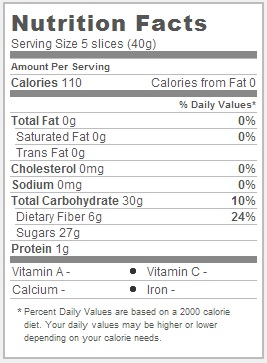
Trader Joe’s Dried Persimmon – Nutritional Information
Trader Joe’s Cultured Coconut Milk – (Blueberry & Vanilla Flavors)
Posted: May 2, 2013 Filed under: Blueberry, Coconut, Kosher, Trader Joe's Brand, Vanilla, Vegan, Vegetarian, Yogurt | Tags: Cultured Coconut Milk, Yogurt Substitute 2 Comments
Cultured coconut milk, not yogurt. How could you even begin to confuse the two?
As you may be aware, I have a thing for coconut milk. Maybe not a well thought through thing, but definitely a thing. Basically, if something is made of coconut milk, I go “Wuh? Gimme, somma dat!”
Thus picking up Trader Joe’s Cultured Coconut Milk in blueberry and vanilla flavors was an automatic grab for me. Coconut milk yogurt, awesome, gimme sommma dat. It wasn’t until later that day, as I was unpacking my bags, when the words on the label really sank in. Cultured coconut milk. Not coconut-blueberry flavored yogurt, in fact not even yogurt at all – but a blueberry yogurt substitute made from coconut milk. A vegan, kosher alternative to your dairy product breakfast. Now this was intriguing. Obviously the world is full of human beings, many of them wonderful human beings, who elect not to eat dairy products for a variety of reasons. Nevertheless, the hankering for dairy products persists – an itch that one perpetually hopes to have satisfactorily scratched by innovative new products such as this one. Not an issue I personally have, but one that intrigues me none the less.
The first question, of course, is does this stuff taste like coconut?
No it does not, not at all. No more than your pot of Dannon tastes like milk. The coconut milk base here is effective obscured and overridden by the “yogurting” process, a process that is scientifically not actually referred to as “yogurting”, but which in this case seems to involve a great deal of flavorless seaweed extracts (our old friends agar and carrageenan among them), and some industrious bacteria.
A second question arrives hot on the heels of the first – how much like regular yogurt is this cultured coconut milk? Not more than a close miss, actually. Coconut milk “yogurt” falls squarely into the imperfect facsimile camp, alongside such not-quite-there simulacra as Tofurkey, Silk, and Fakon. Simply put, you won’t mistake this cultured plant fluid for Yoplait.
That said, Trader Joe’s does score points in two important arena. One, it doesn’t violently merge two words into a terrible vegetarian pun (“cocogurt”, perhaps), and two, cultured coconut milk tastes pretty good in its own right. Taken as a dairy yogurt supplement coconut milk yogurt doesn’t quite hit the mark, but taken as a new sort of breakfast item it’s not bad at all.
Trader Joe’s Cultured Coconut Milk differs from dairy yogurt in two chief ways – it’s much looser, fluidic almost to the point that threatens to spill from your spoon. However, it’s also strangely creamier than other yogurts, with an underlying velvety smoothness that coats your tongue in pleasant way.
The strength of this yogurt substitute depends almost totally on your enjoyment of this novel texture. Taste-wise the coconut milk culture tastes fine – the blueberry tastes like yogurt blueberry and the vanilla tastes like yogurt vanilla. Not much news there. Being able to enjoy the coconut milk culture is simply a matter of being okay with a loose, velvety yogurt over a firmer, less smooth one.
I’d be a convert, honestly, if it wasn’t for one thing. Quickly scroll down and check out the protein content – a single gram. Not much protein in those coconuts, evidently.
The main reason I turn to yogurt for my sustenance in the mornings instead of, say, a bagel or muffin, is because of the aura of healthiness surrounding the concept of yogurt. There might be just as much sugar in a little pot of Yoplait (27 grams) as there is in a whole donuts but yogurt has protein, dammit! That has to count for something. Trader Joe’s Coconut Milk Culture has 20 grams of sugar in it per serving, a considerable payload in it’s own right. Take the protein out of the equation and all you’re left doing is slurping up a sweet, loose paste of dubious nutritional value.
Breakdown
Would I Recommend it: Tailor made form my vegan-Hasidic friend, less compelling for everyone else.
Would I Buy It Again: As an experiment for a smoothie base, maybe, but probably not.
Final Synopsis: An intriguing yogurt alternative, but no protein and plenty of sugar ultimately make it less than desirable.
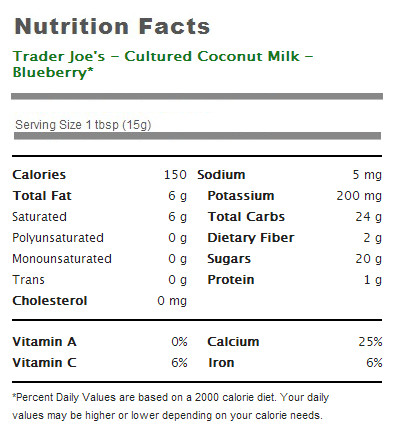
Trader Joe’s Coconut Milk Culture (Blueberry) – Nutritional Information
Trader Jose’s Vegetable Stuffed Poblano Peppers
Posted: April 30, 2013 Filed under: Frozen Food, Poblano, Trader Joe's Brand, Vegetarian | Tags: chile rellano 2 Comments
Stuffing those veggies inot more veggies. Doing it.
Occasionally I sit at the table gnashing my teeth and staring balefully at a plate of vegetables. My complaint, I think, is a common one – there simply are not enough vegetables in my vegetables. I, and no doubt you, will be relieved to discover that Trader Joe’s has taken a direct approach to resolving this problem by splitting some poblano peppers open and stuffing them to over flowing with corn, beans, wheat berries, quinoa (and a bit of cheese) in Trader Jose’s Vegetable Stuffed Poblano Peppers.
Essentially we are dealing with a chile rellano made with more veggies instead of meat. Why this rellano like product, not even labeled as such, is handled under the Trader Jose’s label while this one is not shall remain a mystery for all time – knowable only to the augerers in Trader Joe’s occultism department.
This veg-and-cheese medley makes for a tasty filling and manages to avoid the heavy lingering vegetable aftertaste common to other veggie-only dishes. This is notable given that the veggies in question are massive, whole kernels of corn and insolent, lounging beans – an almost aggressively vegetarian dish showing off its full vegetable pedigree on its face. That said, the strongest taste is that of the meaty, thick-skinned poblano peppers that require a knife to saw through. The poblanos have lost much of the fire they pack while raw but not all of it, making this a mild dish with a faint edge of tongue-tingling heat.
I microwaved my Vegetable Stuffed Poblano Peppers in leiu of the 25 minute oven prep, and found that the peppers came out somewhat tough and resistant – far from the tender bell pepper skin of Trader Joe’s Stuffed Peppers with Seasoned Turkey and Rice. Worse, the poblanos were laced through with a bitter tinge, a common feature of poblano’s that have been overcooked. Was this my fault? Perhaps, but I adhered to TJ’s box-side directions so I’m going to pass the buck on to them.
A final intriguing touch is the addition of wheat berries and quinoa in the stuffed peppers – two quasi-grains not commonly associated with Mexican cuisine. I wrote about these trendy, health alternatives to other grains here. In the stuffed peppers their presence is largely undetectable, masked by the other stronger tastes, but lending a pleasant quality to the texture of the sauce.
I mentioned Trader Joe’s Turkey and Rice Stuffed Peppers already, and I can’t help but comparing this dish with that one overall. Do Trader Joe’s Vegetable Stuffed Poblano Peppers stand a chance of replacing this favorite of mine? By no means, the tender, savory, seasoned turkey stuffed peppers beat this newcomer across the board. A decent stuffed-pepper stand-in for the vegetarian crowd perhaps, if they found this one too cheesy, but no match for taste and texture of the stuffed red peppers.
The Breakdown
Would I Recommend It: To vegetarians in need of a hearty stuffed pepper only.
Would I buy it again: Almost certainly not.
Final Synopsis: A vegetarian-friendly chile rellano that’s basically mediocre.
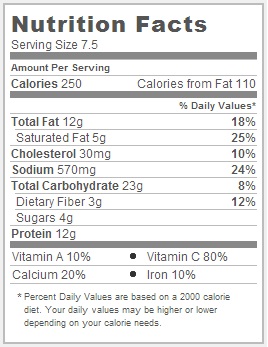
Trader Jose’s Vegetable Stuffed Poblano Peppers Nutritional Information
Trader Joe’s Chile Rellano
Posted: April 23, 2013 Filed under: Cheese, Frozen Food, Pepper, Poblano, Trader Joe's Brand, Vegetarian | Tags: cheddar, monterey jack, poblano pepper 1 Comment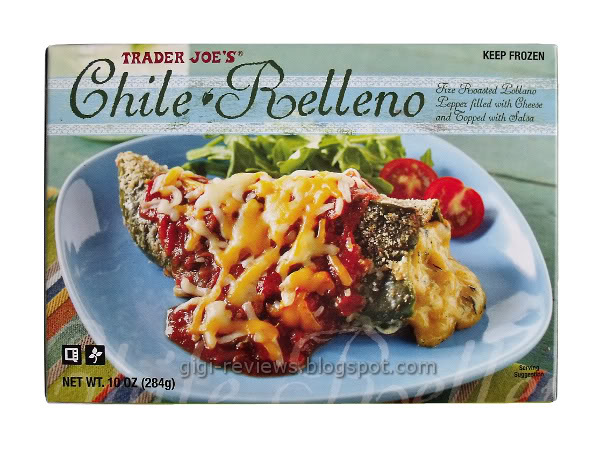
The tube of cheese in question.
Once again, I am shocked that Trader Joe’s Chile Rellano is not on the Trader Jose label. What’s the point of positing the existence of a Hispanic doppelganger if you’re not going to ham-handedly slap him on all your Spanish-inspired cuisine?
For that matter, why have a Trader Jose, a Trader Giotto, a Trader Josef and so on, but not a Korean Trader Jae, an Egyptian Trader Jahi, or a Thai Trader Jayavarman? Why the narrow window of ethno-specificity Trader Joe’s? Edward Said called, he wants to know where you got your Orientalism.
In any case, I better start off this review by disclosing that I’m not really all that into chile rellanos. My list of favorite Mexican food looks like this:
Table 1-1: Mexican Food Preference Chart
- Smothered/”Wet” Burritos
- Fish Tacos (soft)
- Nachos (supreme or ultimate)
- Sweet corn cake mash
- Huraches
As you can see, chile rellanos don’t even crack the top 5, so TJ’s was already embarking on an uphill battle when they created this product then let me go home with it. Strike 1 and 2, Trader Joe’s. Dubious but willing, I tucked in.
The Trader Joe’s Chile Rellano is a roasted poblano pepper, nice and mild, stuffed with monterey jack, slathered in spicy tomato salsa, dusted with bread crumbs and topped with cheddar. When that much melted cheese comes into play, it’s hard to make an unpalatable dish – and as you might imagine these rellanos go down easy.
While most rellanos contain meat of some sort, take note that this one is a vegetarian dish, meaning it is little more than a meat-free, tube of cheese.
This is not necessarily a bad thing, especially if you’re a vegetarian looking for sustenance amid the barrens of the modern grocery store. If you’re looking for that meat free Mexican food fix, here you are. The salsa is admirably spicy, delivering a short sharp burn with each bite, and the roasted pepper is toothsome, if somewhat tough to cut. The vegetarian rellano also boosts a surprisingly high protein profile, 22 grams to the serving, which might give you some sense of how much cheese we’re talking about here.
For my part, I found the meat-less rellano less than filling. As a component to a larger Mexican dish it would certainly be more effective – as plate compatriot to an enchilada, perhaps, or a taco. However, if I’m going to ingest that much straight up cheese I have other ways I’d prefer to go about it. (See table 1-1).
The Breakdown
Would I Recommend It: To Mexican craving vegetarians, no one else.
Would I buy it again: I don’t see it happening.
Final Synopsis: This cheesy pepper is alright, but nothing special.
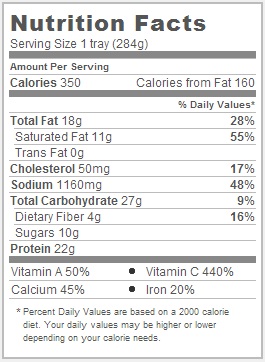
Trader Joe’s Chile Rellano – Nutritional Information
Trader Joe’s Raspberry and Vanilla Cream Bars
Posted: April 18, 2013 Filed under: Desserts, Frozen Food, Fruit, Gluten Free, Raspberry, Trader Joe's Brand, Vanilla 5 Comments
Behold the clever angle the bars are displayed at. Surely the stick is down there somewhere, right? Just out of view maybe?
I don’t normally review items that are obviously delicious. For example, I’m not writing a review of Trader Joe’s Chocolate Covered Sea Salt Butterscotch Caramels.
Trader Joe’s Raspberry and Vanilla Cream Bars would seem to fall into this category. I mean, frozen fruit juice bars? It’s not like no one’s every thought of doing this before. Do you really need to be told if you’ll like this or not – especially if you’re at Trader Joe’s where, if you’re in the mood for a frozen fruit bar, you have a choice of about three options?
Let’s just consider the ingredient list – raspberries, sugar, vanilla, cream. Does this sound like something you’d like to eat in a frozen bar form? Of course it does! It really seems like a waste of perfectly good turns of phrase, not to mention everyone’s time, to dig much deeper.
So that’d be it, article over, if it wasn’t for the fact that someone in the Trader Joe’s corporate chain of command is either a twisted madman, or a genius in thrall of a dream beyond our comprehension. In either case the visions that torment him have been made manifest in this bar for, you see, this bar has no stick.
NO STICK. It’s just a little plastic envelop with a lump of frozen fruit and cream in it.
In all honesty, Trader Joe’s expects you to take out one of the small bags, tear open the plastic wrapper, and devour their Raspberry and Vanilla Cream bar right there as is. There is simply no way to take it out of the wrapper without sticky-ing your fingers. I suppose you could drop it onto a plate, at which point you will stare at the sad, stick-less lump and wonder why TJ’s would do such a thing.
The history of civilization is the story of man striving to develop the perfect frozen treat delivery system – whether sandwiched between cookies, pushed up a cardboard tube, enrobed in chocolate and wrapped in foil, served in tiny tubs, sugar cones, waffle cones or chocolate-dipped waffle cones progress has marched on! And throughout it all the stick has remained most simple, most pure and cost effective method – the father and platonic ideal of all frozen treats delivery systems. All this progress out the window!Trader Joe’s is trying to single-handedly undo all the progress frozen novelties have achieve in the past centuries and drag it kicking and screaming back to the dark ages.
This is madness Trader Joe’s! Put sticks in your fruit & cream bars! We are not animals! We will not mess our faces like beasts at the trough. If you wanted to serve ice cream in a little pouch, than call it ice cream in a little pouch. Don’t call it a bar and stick it in with the rest of the iced novelties as if that were somehow sane.
Also, the bars are a little bit small. Each bar comes in at 40 grams, or 1.4 ounces, which makes them about as big as your cell phone’s battery back, or about two bars of guest soap set side to side. That’s may not be much to chew on, but the cream is so sweet and the fruit so rich that it eats slow It is an intense and delicious taste sensation that brims over with real raspberry taste and sweet vanilla cream that would lend itself to slowly nibbling – if only it had a stick.
The Breakdown
Would I Recommend It: Yes, if you don’t mind tiny bars that are doomed to be messy.
Would I Buy It Again: No, it’s just not fun to eat.
Final Synopsis: A delicious bar, fatally flawed by the lack of a stick.
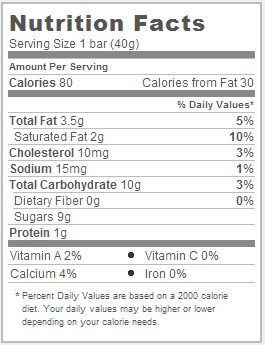
Trader Joe’s Raspberry and Vanilla Cream Bars – Nutritional Facts
Trader Joe’s Cioppino Seafood Stew
Posted: April 16, 2013 Filed under: Fish & Seafood, Frozen Food, Shellfish, Soup, Trader Joe's Brand 9 Comments
The giant, over-sized cioppino bag.
Seafood can be done well, and seafood can strand you in the bathroom for 24 hours – so when someone, even Trader Joe’s, offers to make me a stew from assorted castoff bits of seafood I take pause. Nevertheless, it is my duty to report on such things to you, dear reader, and so I found myself face to face with a bubbling bowl of Trader Joe’s Cioppino Seafood Stew.
Cioppino, despite it’s robustly Italian-sounding name, is actually an American creation – springing into existence on the docks of San Francisco in the 1800’s. It owes it’s name to a derivation of the Italian word meaning “to chop”, a naming convention that is less than totally unique.
In this case, the chopping was done to whatever the fisherman had left over once the good bits of their day’s catch had been accounted for. This fish, bivalve and crustacean medley was then chucked into a pot and simmered in a tomato and wine base until delicious. This colorful history played through my head as I stared at the floppy, opaque bag Trader Joe’s was peddling – images of unsavory, marine castoffs swimming through my head. As I ripped open the bag and poured its contents into my stew pot, I discovered my fears were for naught. Once again, the TJ’s chefs have saved what may have been a questionable concept in lesser hands by the strength of their delicious recipes. Rich, red and flavorful, Trader Joe’s Cioppino Seafood Stew is as hearty as it is delicious.
It’s the base that makes it work – a heavily seasoned tomato stock cut with red wine that verges on the edge of being too salty without going over. It’s a good stew base through and through, a gut-warmer that invites slow, deep sips.
The seafood itself is a nice mixture of deboned cod, and shelled shrimp, scallops, mussels and clams. Strictly speaking, this is a departure from traditional ciopinno, which is made from local fish plus shrimp, crab and squid, still bone-in and in shell, as suits the tuff wharf walkers of San Fran. Even better, despite the plentiful helping of seafood in the stew, it doesn’t suffer from a debilitating fishy taste.
I didn’t find much to dislike with this stew. One quibble is that the bag contains 80% of your daily sodium intake between two small servings. Speaking of which, the bag is ridiculously oversized for the contents it holds. Despite the appearances, you’ll be able to cook up the entire dish in a pint-sized sauce pan with room to spare. Trader Joe’s calls this two servings. Not where I come from, TJ.
The Breakdown
Would I Recommend It: Get your cioppino on, those of you not suffering from high blood pressure!
Would I Buy It Again: It’s the perfect excuse for me to buy a bread bowl.
Final Synopsis: A tasty, salty seafood stew that does it all right.

Trader Joe’s Cioppino Seafood Stew – Nutritional Facts
 Eating At Joes
Recent Comments