
Trader Joe’s Fruit Bar with Flax and Chia Seeds
Posted: August 26, 2014 Filed under: Apple, Candy, Fruit, Snacks, Trader Joe's Brand | Tags: 3 stars, chia seeds, flax seeds, Fruit, fruit bars, Snacks, Trader Joe's 2 Comments
Flax seeds *and* chia seeds *and* stylish packaging? I’m in.
Trader Joe’s has renewed it’s fruit bar producing efforts of late. We just took a look at their new line of thick and hearty two ingredient only fruit bars. Not content to rest with a mere 14 varieties of fruit bars across three separate labels, TJ’s has released yet another one – this one simply called “Fruit Bar with Flax and Chia Seeds.” The hardest part about covering these bars are their homogeneous names, a trend that TJ’s has decided to double down on by not even telling you what kind of fruit this bar has in it. Fruit, it suggests to you coyly, with seeds! Okay TJ, that weird enough to get my attention.
The reason, it turns out, that Trader Joe’s leaves the fruit name off this one is that, for once, it’s a blend of the whole orchard. Apple puree is the primarily ingredient, followed by a mixture of pear, elderberry and strawberry touched with lemon juice.
I went in to the bar with low expectations – after reviewing every fruit bar TJ has to offer, I was pretty sure they wouldn’t have any more surprises for me. I was wrong. This bar easily bests all of the Apple & Whatever bars I reviewed last month. That maybe shouldn’t be such a surprise really – when you limit yourself to just 2 ingredients, you’re also limiting our flavor palette. Trader Joe’s Fruit Bar with Flax and Chia seeds has a much deeper, more nuanced taste, injecting each chewy, tacky bite with a density of flavor, one fruit mingling harmoniously with the next in a way that teases the tongue to probe each bite. The lemon juice, in particular, has an appreciated presence, giving the bar a zesty bite that sets it aside from its starchier, blander siblings.
In and of itself, Joe has a winner here. However, they don’t stop there, mixing in a pinch of flax and chia seeds to boost the nutritional profile. Both flax and chia seeds have been very much in the public eye of late for their “super nutrient” qualities. While their purported qualities owe as much to marketers as they do to science, these seeds are undeniable potent sources of nutrients and fats. Each bar brings a full 1000 milligrams of Omega-3 Fatty Acids, advertised right there on the front of the wrapper. That’s a fun perk if you’re trying to get more into your diet, and an interesting concession to texture for the rest of us.
As already mentioned, the bars is gooey and tacky in that “stick to the wrapper” kind of way. The added seeds give the bar a touch of crunch to each chewy bite that lends them a touch of welcome body.
The result is a surprisingly tasty, fruity, and munchable fruit bar. If you’re looking for single ingredient fruit bars (or fruit leather), you’ve got plenty of choices out there. However, if you’re just looking for a good fruit bar to snack on, this is the best TJ currently has to offer.
The Breakdown
Would I Recommend It: Sure, if you like fruit bars, or need natural alternatives Fruit Roll Ups.
Would I Buy It Again: I’m not a big fruit bar guy, but if I was this is the one I’d go for.
Final Synopsis: Trader Joe’s tastiest fruit bar.

Trader Joe’s Fruit Bar with Chia Seeds and Flax Seeds – Nutrition Facts
Trader Joe’s Cookie Butter Ice Cream
Posted: August 21, 2014 Filed under: COOKIE BUTTER!, Desserts, Frozen Food, Trader Joe's Brand | Tags: 5 stars, cookie butter, ice cream, recipie, Trader Joe's, vanilla 1 Comment
Humana humana humana- COOKIE BUTTER?!?!?
We all know about Cookie Butter. We all know that it’s a semi-divine creation that has melted hearts across the nation and, in fact, the world – lighting up the taste buds with the decanted taste of pure Christmas from here to Belgium. If, and it saddens me to even spin the hypothesis, you don’t know what cookie butter is, you had better educate yourself.
Now, it has long been my firm stance that cookie butter is like an edible form of elemental gold – pure and perfect in and of itself. We’ve seen that mixing it with anything else, even Nutella (?!), merely dilutes it’s purity and introduces imperfections.
So it was with a great deal of excitement, but also skepticism, that I picked up Trader Joe’s latest, greatest development – Cookie Butter Ice Cream. On the one hand, how could cookie butter ice cream possibly be better than cookie butter by itself. ON the other hand, it’s ice cream! Maybe “Nutella” couldn’t do the job, but if there was ever anything that could improve on CB it’s a good helping of heavy cream and sugar.
These are high stakes to be sure. Trader Joe’s Cookie Butter Ice Cream is sure to either elate me to previously imagined heights of ecstasy, or deliver a crushing blow to the solar plexus of my soul – there is no middle ground here.
It is to my elation that I can report Trader Joe’s really knocked this one out of the park – an undeniable master stroke. How did TJ manage it? The answer is as simple as it is brilliant. Starting with a nice, creamy vanilla they mixed in a plenty of crushed speculoos – permeating the medium with that cookie butter taste. On top of that, is this is what carries the day, they wove ribbons of pure cookie butter, caramel like, through the whole thing. The result is a sweet, delicious ice cream that alternates moments of low-key, pleasant cookie butter taste with bursts of intense, uncut cookie butter. I don’t see how heroine can be illegal while this isn’t, but regardless you and I get to reap the windfall.
There’s not much more to add, really – the ice cream is as good as you want it to be. If you’re still reading at my post at this point, you should obviously stop and go out to buy some cookie butter ice cream. Eat some of that, then come back and we can finish here.
The question of how to incorporate Cookie Butter Ice Cream into a recipe is may well be as futile as asking that question of cookie butter itself. It’s hard to improve on eating it straight from the bucket – sometimes even the spoon seems like a cruel impediment standing between you and sweet, sweet cookie butter. Nevertheless, I took my best shot at it with this week’s recipe for Salted Cookie Butter Ice Cream Shakes.
Is it better than the straight ice cream? I can’t look you straight in the eyes and say that. It might be better to think of the recipe as a remix of a song you really like, as another way to experience that initial rush over again.

Trader Joe’s Salted Cookie Butter Ice Cream Shake
Salted Cookie Butter Ice Cream Shake
Ingredients:
- ~ 3 cups of Cookie Butter Ice Cream
- ~1 cup milk
- A pinch of Trader Joe’s Pyramid Salt
Directions:
- Put all the ingredients in a blender and puree to your heart’s content.
I would recommend using whole milk, or even Trader Joe’s Organic Top Cream Milk, for the creamiest taste.
Also, a note on the salt. I used the pyramid shaped flake salt we’ve looked at before. The advantage is that even after blending there are small flakes of salt suspended in the shake, meaning you get little pleasant moments of saltiness to highlight the sweetness. If you don’t have flake salt on hand, consider just throwing a tiny pinch of salt on top at the end, instead of blending it in.
The Breakdown:
Would I Recommend It: Yes. If I met the President, I’d probably recommend it to him.
Would I Buy It Again: Sure, whenever they’re not sold out.
Final Synopsis: Cookie butter meets vanilla ice cream – and it’s as good as you’d hope.
Trader Joe’s Organic Cream Top Milk
Posted: August 19, 2014 Filed under: Trader Joe's Brand | Tags: cream top milk, Milk, Organic, organic milk, Trader Joe's, whole milk 9 Comments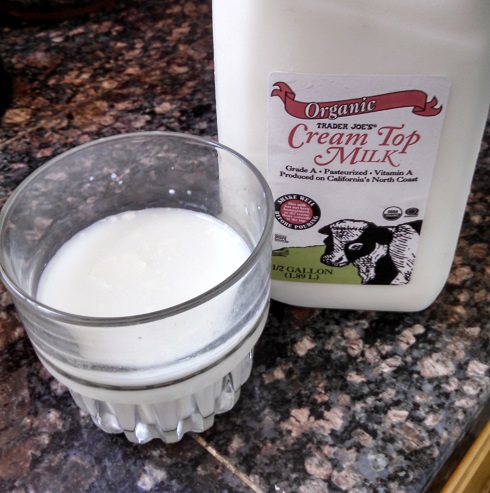
Not pictured: the plug of solid creamy fat.
Sure, I’m a city boy. Aside from a week spent working on a cattle ranch, most of my encounters with cows have been at the end of a fork. Even the cows on that ranch we’re destined for the killing floor (a misnomer actually – it’s more of a steel grating that lets loose material sluice through). Come to think about it, milk is the closest I ever get to a living cow.
And really, I thought I understood milk – it’s food number one after all. There’s literally no food product I’ve drinking for longer . You’ve got your skim milk, your whole milk, and that’s about it. So it was with considerable surprise that I encountered Trader Joe’s quart of Organic Cream Top Milk. What is this stuff? It’s neither of those types – how could there be a milk that I’d never heard of before?
Determined to find out, I cracked open the bottle, and was shocked at what I saw. I was prepared for cream top milk to taste creamy, or to have cream floating on top of it. What I wasn’t ready for was a physically solid plug of butter-like cream to be between me and the rest of the milk. Just beneath the milk cap is a stopper, and that stopper is a thick, smooth lump of pure milk fat. It doesn’t so much float on top of the milk as it is firmly crammed into the spout. Can milk be like this? Is this even normal?
Yes, as a matter of fact, it is. In fact, for much of the history of milk drinking, this is how everyone’s milk looked. The half inch thick of plug of butter fat is simply the result of skipping one eminently modern step in the milk process – homogenization.
Milk is a naturally complex liquid, with a great number of balanced interactions that occur between the various proteins, enzymes and fats that constitute it. About half a day after being gathered, the creamy fat in milk organically rises to the top and melds together.
Homogenization is the act of breaking these fats back down, pulverizing them on a molecular level, essentially, until they are so diffuse and scattered that they can no longer naturally join up. This microscopic demolition is done by rapidly shooting milk through tubes thinner than the width of a human hair until the fat can no longer reform. It’s a process first perfected by enterprising Frenchman Auguste Gaulin in 1899. The primary reason was one of longevity – with the fat dispersed throughout milk it becomes rancid less quickly, in addition to which it has a somewhat creamier taste, due to the diffusion of the fat.
So why is Trader Joe’s so determined to undo the hard work of monsieur Gaulin? The reason is similar to the drive for organic food – a return to nature. The question being asked is, is it not better to simply let milk be? Is it not, perhaps, in someway harmful to meddle so much with something fundamentally natural. There are proponents who come down on both sides of this issue, but science has not yet struck a conclusive blow for either side. In the absence of overwhelming evidence, the question is mainly a matter of personal taste. Just how natural do you like your milk?
It should also be noted that Trader Joe’s Cream Top Milk has several other features beyond the thick pat of cream. Most notably, it has a subtly richer flavor and more organic scent than your typical homogenized whole milk. There is a sort of ineffable wholeness to the smell that homogenized milk seems to lack.
Does this make it a worthwhile purchase? If you value being that much closer to the source – a touch closer to nature – then this is the milk for you. If you want milk that will last longer and taste a little blander, than you can stick to whole milk. Of course, if you usually shop skim like myself it’s all moot point. With 150 calories per cup, and more than half that from fat, it’s more of a calories expenditure than I’m willing to accept in a glass of milk.
This was an interesting purchase because it was a visceral reminder of the truly organic nature of milk, and I rather like the thought of having a little pat of semi-butter to harvest every morning for my toast or whatever. That said, it’s increasingly a fat-free world we live in. I might pick some more of this up around Christmas to see how it handles in egg nog, but until then I’ll be satisfied just knowing there’s something so primal on the dairy shelf.
The Breakdown:
Would I Recommend It: Yes to people who like their orange juice with pulp and their beef grass fed.
Would I Buy It Again: Nope – too much fat for my figure.
Final Synopsis: Whole milk with the fat floating on top instead of mixed in.
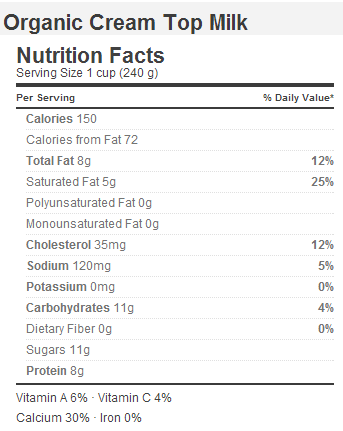
Trader Joe’s Cream Top Milk – Nutrition Facts
Trader Joe’s Champagne Grapes
Posted: August 14, 2014 Filed under: Fruit, Grapes, Trader Joe's Brand | Tags: 4 stars, black corrinth grapes, champagne grapes, currants, grapes, mini grapes, Trader Joe's 2 Comments
Ha ha – and you thought YOU were small, cherry tomatoes!
Ah – champagne grapes! That’s precisely the type of exclamation I would have made when I came across these, except that I’d never heard of champagne grapes before and had no concept of what they were. Well, that might be a bit disingenuous, I suspected they might be grapes – but why so small, why so many, and why the evocative and memorable name?
The champagne grape wins some sort of award for being the most confusingly named grape. For starters, our little champagne grapes have nothing to do with the manufacture of champagne. Champagne is, of course, made from grapes – but those grapes are either Chardonnay or Pinot Noir grapes, larger, thicker-skinned brutes. The pseudonym “champagne grape” allegedly owes its existence to one Mr. Allin Corrin – a grape producer from Reedly, Califronia. According to lore Mr. Corrin arranged to have this variety of tiny grape featured in Sunset Magazine next to a flute of champagne and the blurb “champagne grapes”. Supposedly, that single image in Sunset Magazine had a strong enough national reach to indelibly brand the grape with that name forever more. I would like to believe this story as much as I’d like to believe the story about gyoza and Chinese ears, but there seems to be little evidence to back up the claim beyond a passel of unsourced Yahoo Answer results.
Prior to being called champagne grapes, these little guys were known as Black Corrinth grapes, due to their origin in that region of Greece – still the primary produce of the grapes to this day. Of course, like all grapes, Black Corinth grapes undergo that magical change when they’re dried – a magical change that transforms their name. While most grapes become raisins, the champagne grape actually becomes a currant.
Wow, you might be thinking, so that’s where currants come from! Well, no – not really. In all likelihood the currant you’re thinking of is the blackcurrant or redcurrant, two very similar berries in taste and appearance that just happen to be totally unrelated to grapes. The full name of the dried champagne grape is the “Zante currant”, but the “Zante” part is commonly dropped, adding to the whole confusion.
Long and complicated name history aside, you may well be wondering how the Champagne grape actually tastes. The answer is, quite delicious! Each tiny grape is incredibly sweet and flavorful, not to mention seedless. The taste is like that of a larger grape, but concentrated into a smaller space, like a Jelly Belly compared to a Jelly Bean. The little grapes are sweet all the way through – never tart or harsh.
Of course, being so tiny and numerous, you might well be asking yourself what to do with them. Well, for starts there’s nothing wrong with just casually snacking on them – much as a recumbent Pharaoh may be want do. One of the perks of the diminutive size of the grapes is that the stems are nearly thread-thin and supple enough to eat. You can simply snack down on the little grape without bothering to stop and pluck out each tiny stem.
If you’re looking for something a little grander to justify your champagne grape purchase, they can easily be substituted into any recipe that call for any other sort of table grape – just be sure to account for the extra sweetness they bring. It’s easy enough to scatter a handful of these over your salad, (to be paired with a nice vinaigrette perhapss). If you’re feeling even more adventurous, you can try the grilled cheese and champagne grape receipe below:

“Crying over my champagne” Grilled Cheese Sandwich
Recipe – “Crying over my Champagne” Grilled Cheese Sandwich
Ingredients:
- A couple slices of bread
- Softened butter (enough for bread and sautéing)
- Some sliced cheese – cheddar is nice.
- Very thin slices of red onion
- About 2 tablespoons worth of champagne grapes
Directions:
- Heat a skillet to medium heat.
- Add the rest of the butter to the pan and sautee your red onions. (Cook for 5 to 7 minutes or until tender, stirring frequently).
- Butter each slice of bread on one side.
- Lay a slice of bread, butter side down, on a plate and add the cheese slices.
- Add the sautéed onion, followed by the champagne grapes. Try to spread everything evenly.
- Place the other slice of bread on top, buttered side out. (Press down slightly to keep it all together).
- Cook over medium heat for about a minute to a minute and a half on each side, until nice and melted.
- Cut the sandwich in half (diagonally!) and serve.
The red onion is such a strong taste, that it can overpower the gentle sweetness of the champagne grapes. Sauteeing them makes the onions milder, but if you like your sandwich to have bite you can skip this step.
All in all, these grapes are a perfectly nice way to fill your fruit bowl with something a little out of the ordinary. If you’re a fan of grapes, or sweet fruit in general, you’ll want to give these a shot.
The Breakdown:
Would I Recommend Them: Yes, these are very nice for snacking on.
Would I Buy Them Again: Sure, I like to have a varied fruit bowl.
Final Synopsis: As Jelly Bellys are to Jelly Beans, so are Champagne grapes to regular table grapes.
Taos Joe’s (Trader Joe’)s Southewest Chicekn Quesadillas with Seasonal Vegetables
Posted: August 12, 2014 Filed under: cheddar, Cheese, Chicken, Frozen Food, Meat, Onion, Poblano, Spinach, Trader Joe's Brand | Tags: 3 stars, cheese, mexican food, quesadilla, southwester food, taos joe's, Trader Joe's 2 Comments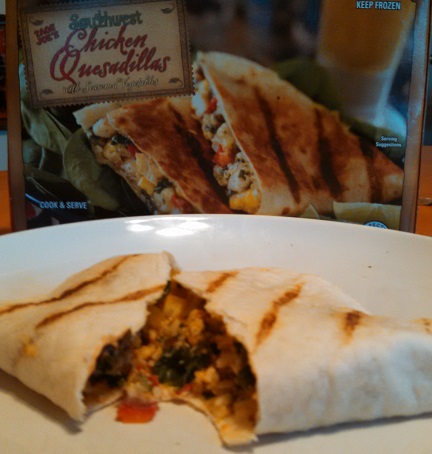
Yup, it comes pre-grill marked. All you need to do is pop it in the microwave and lie to your guests.
The only real rule I have for myself with this blog is to review only those things which are unusual enough to catch one’s attention, but are too unusual to warrant an immediate purchase. This plan has guided me down some terrible alleyways and up some delightful avenues. Why then, am I bothering to review Trader Joe’s Southwest Chicken Quesadilla – one of the safest, least intriguing foods out there? After all, isn’t the quesadilla such a staple of kid’s food menus for its tremendously simple execution and supremely inoffensive recipe, namely melted cheese in a white flour tortilla?
Yes, all that may be true, but I was drawn to this product for one very simple reason – the “Taos Joe” brand name.
One of Trader Joe’s charming quirks is their penchant for tweaking their brand name to reflect the “ethnic” nature of some foodstuff or another. There is Trader Josef and Trader Jose, Trader Giotto and Trader Jacques, just to name a few.
Things get a little nutty after this, as Trader Joe starts breaking the pattern altogether with Arabian Joe and Trader Ming. What strikes me as particularly strange, is that Trader Joe’s sort of stops there. Despite having a huge range of Thai, Indian and even African cuisine, there are no labels that reflect these cultural roots. Why, Joe?
While this is all charming and clever, it also irks me deeply because of their erratic application of nomenclature. Why, in god’s name, is this guacamole not a Trader Jose product, but this guacamole is? Perhaps only Joe himself knows.
At any rate, the sight of a Taos Joe product stopped me cold. What I like most about the name is that it’s a sign of Trader Joe’s true commitment to this gimmick. A less devoted brand might feel tempted to just stick their quesadillas under the Trader Jose name, but not so TJ. Evidently they felt that the somewhat subtle difference between Southwestern and Mexican cuisine demanded the creation of the entirely new “Taos Joe” label.
Actually, come to think about it, that’s even more irksome. Going through all the trouble of generating a brand name just for southwestern food makes the absence of, say, a Greek brand feel like more of an intended slight than a simple overlook. Is it madness or brilliance? You be the judge.
That more or less brings us to the quesadilla itself, about which there’s not a lot to say. This quesadilla is a pretty comfortable quesadilla – it’s thick, cheesy, soft and tasty in that sort of way that melted cheese usually is. If you’ve ever had a quesadilla, you pretty much know what you’re going to get from this.
That said, Trader Joe’s does manage to work in a couple nice additions that elevate it above a microwave-it-yourself affair. The best addition are the titular seasonal vegetables – a phrase which in this case means corn, red bell pepper, jalapeno pepper, and strangely, spinach. The jalapenos, along with the blend of monterrey jack and pepper jack cheese, give the quesadilla a barely detectable blip of spiciness, but not so much that it really does anything for the dish.
The vegetables and white chicken are diced to rather small chunks, and spread evenly throughout the quesadilla. This gives it a nice body and something to think about other than the cheese while chewing, but doesn’t really effect the overall cheestastic taste of the dish.
Not getting too fancy with it is actually to Trader Joe’s credit. People don’t usually turn to a quesadilla because they want challenging food, but because they want something pleasant and reliable. This quesadilla may not hit any culinary heights, but it does satisfy on a basic, comfort food level.
In the end, it’s a pretty solid dish – some chicken, some vegetables, plenty of cheese, and microwavable in about 3 minutes. Perfect for a quick and easy frozen dinner any time.
The Breakdown:
Would I Recommend It: Sure, this is a pretty good quesadilla.
Would I Buy It Again: Probably not – it’s got lots of cheese, but not a ton of excitement.
Final Synopsis: A perfectly good quesadilla, suitable for whatever.
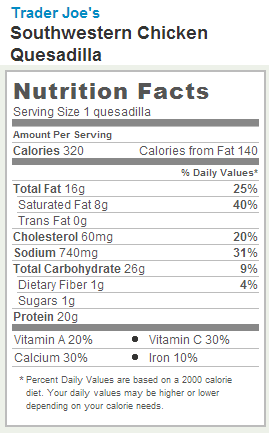
Trader Joe’s Southwester Chicken Quesadilla – Nutrition Facts
Trader Joe’s Thai Shrimp Gyoza
Posted: August 7, 2014 Filed under: Fish & Seafood, Frozen Food, Shrimp, Trader Joe's Brand | Tags: 3 stars, dumblings, gyoza, pot stickers, shrimp, shrimp gyoza, Trader Joe's 2 Comments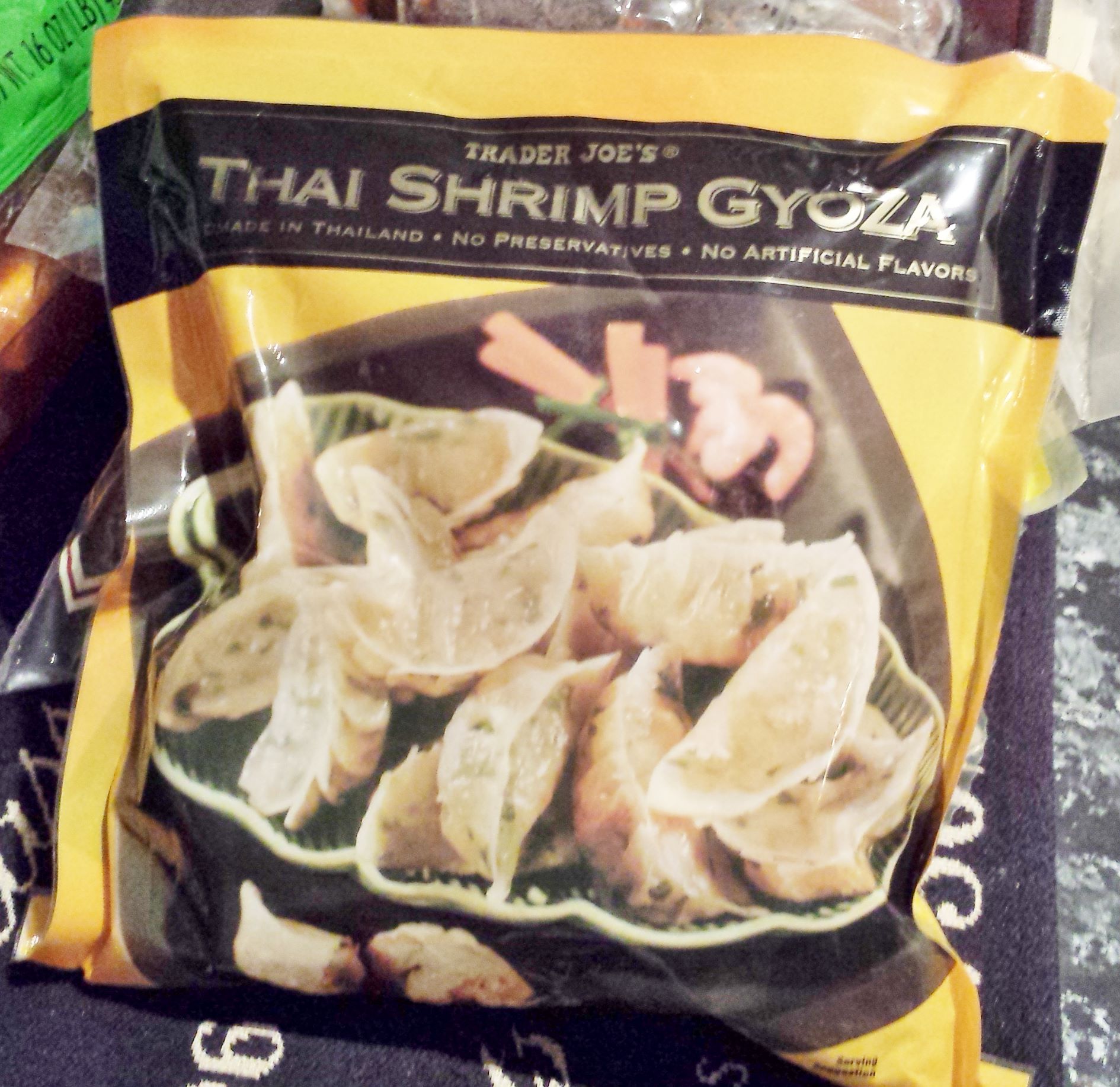
Never before has shrimp tasted so much like chicken.
Did you know Trader Joe’s sells Thai Shrimp Gyoza? I sure didn’t, and stood staring at these flat-footed for several moments when I stumbled on them the other day. Everyone knows I think TJ’s gyoza are excellent – and here was an even cooler looking bag with an even more exotic sounding gyoza in it!
Guys, you know I had to take a look. Even if someone had been, like, “Don’t do it, man! I’m you from the future – those gyoza are bad news!” I would have been all like, “Psssh – keep your drama to yourself, I’m rocking these gyoza all the way home.” And you know what? I would now be sure that that hypothetical future version of myself was a fraud – because these gyoza are awesome!
We talked about what makes a gyoza a gyoza last time, and these Thai shrimp gyoza deliver exactly the same, high-quality, pan-fryable gyoza goodness. The difference, of course, is in the filling. A generous mixture of shrimp, white cabbage, chives and green onion, plus spices, stuffs these tender dumplings of goodness. The result is a gyoza with a little more chewiness to it than the chicken or pork gyoza, but a very similar mildly savory, meaty taste. Shockingly similar in fact. Despite the top-billing of the shrimp, there is almost no discernible shrimp taste to these at gyoza at all. In a blind taste test, I would be hard pressed to tell the difference between the chicken gyoza and these shrimp gyoza.
That’s a bit surprising, because while the shrimp has been rather finely chopped it’s still easy to notice the shrimpy texture. This is not the unpleasant lumpiness of the 14 Shrimp Nuggets I gave a shot a while back, but just a sort of pleasant “Oh, that’s a bit of shrimp” experience.
If you’re worried these dumplings would be too “shrimpy” for you, that means you don’t have to worry. On the other hand, if you’re looking for a strongly executed bit of shrimp to enhance your seafood dinner, these aren’t going to do the job. That’s a little strange, but doesn’t detract from the overall goodness of the dish.
Even weirder than this, is why these gyoza are being made in Thailand in the first place. Unlike, say, Trader Joe’s Thai Lime Shrimp Skewers, these shrimp actually are from Thailand. At least, the gyoza are hand made there at any rate, and the shrimp come from off either the Chinese or Thai coast. This is actually a pretty safe thing to say about almost any shrimp you eat, as 75% of the world’s shrimp farming happens between those two countries.
That’s all well and good, but it still leaves the window open on why Trader Joe’s calls these gyoza Thai Shrimp Gyoza in the first place. As we talked about before, the cuisine of gyoza is bound up in the histories of China and Japan – Thailand is sort of a non-player in the whole scene. If you’re getting your shrimp from Thailand, I suppose you’re welcome to throw the word in the title, but if you’re just going to make the whole thing taste just like your chicken gyoza I don’t see how that’s really worth the bother.
I suppose this, as so many other answers, lays with Trader Joe’s inscrutable marketing department. Presumably there’s a chart someone has on their desk that shows seafood sales increase by 7% when the word “Thai” is in the title. At any rate, all the mind games and marketing ultimately give way to how it actually tastes, and in this case the taste is there.
If you’re vegetarian but not pescatarian, or if you’re looking for another totally easy, totally tasty potsticker to stick in your pot there’s no reason not to give these a shot.
The Breakdown
Would I Recommend It: Sure, these are pretty good gyoza – particularly if you’re staying away from meat.
Would I Buy It Again: These gyoza don’t taste all that different from the slightly cheaper chicken and pork gyoza, so probably not.
Final Synopsis: A shrimp filled gyoza that tastes just as good as, and just like, Trader Joe’s other gyoza.
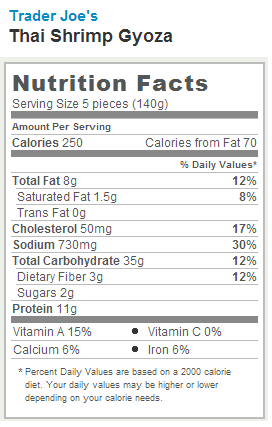
Trader Joe’s Thai Shrimp Gyoza – Nutritional Facts
Trader Joe’s Organic Whole Green Figs
Posted: August 5, 2014 Filed under: Fig, Frozen Food, Fruit, Trader Joe's Brand | Tags: 3 stars, figs, frozen food, green figs, Organic, Trader Joe's 11 Comments
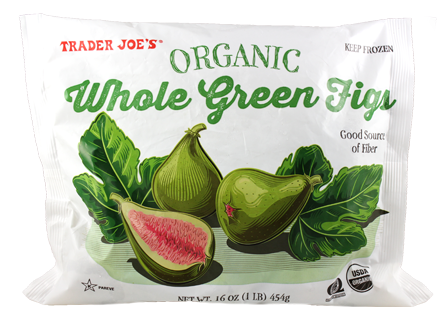
Everything you want from a fig – except the texture.
Do you sometimes crave a whole green fig, but all the ones you find are either not organic, or not frozen rock solid? Well I have good news! Trader Joe’s is solving both of your problems at once with their frozen Organic Whole Green Figs!
The last time we looked at any of Trader Joe’s figs it was their Black Mission Figs, which I found pleasantly sweet and tasty, if you can get over the somewhat unnerving fleshiness of them. Well fleshiness isn’t a problem this time around, because they’re coming to you in the form of rock hard iceballs!
The first thing you’ll notice when you pick these figs up is that Trader Joe’s didn’t go looking for the small ones. Each fig in the bag is a hefty little monster, considerably larger than the fresh Black Mission Figs you might be able to find in the produce aisle. Apart from the size, these green figs (also called kadota figs) are somewhat less sweet than the black figs from before. That said, they’re still figs – which means they’re still quite sweet indeed, and have the same mushy-soft / crispy-seedy center that gives them such a unique bite.
We spent plenty of time reviewing the history of these meaty drupes last time, so I won’t bore you all again with a lecture on prehistoric agriculture. This time let’s take a look at the religious perspective.
As you might expect from a fruit man has had such a long history with (11,000 years+), religion has a good deal to say about figs – in particular considering that they’ve been cultivated widely through the that fertile belt of religion that begins around the Mediterranean and stretches all the way to South East Asia. As such, all the big time religions feature figs in their holy books to a considerable degree.
Adam and Eve, for instance, sought to cover up their shame from God with the trusty old fig leaf – maybe not the best choice considering that figs are a notable skin allergens, and that the natural latex that the fig tree produces is a serious eye irritant. Nevertheless, thanks to A&E, fig leaves entered the art world for a pretty good stretch of centuries as the de facto tasteful genital cover in paintings and sculptures.
Meanwhile, in the religion of Islam, the fig is considered one of the two sacred trees, along with that other old favorite the olive. Going further we find that the historical Buddha went out and achieved enlightenment under the bodhi tree – otherwise known as the sacred fig tree – and that the fig is even considered to be the “world tree” from which all springs in Hinduism. Even Jesus got in on the fig tree, when he chose to kill one in Mark 11:12 by cursing it to death for not bearing fruit. Harsh Jesus!
That’s a pretty good pedigree, the fig! But all that said, what reason do I really have to buy these things frozen?
Obviously, getting them fresh is always going to be your best option, but due to their high sugar content, figs ripen and spoil very quickly. A ripe fig will even split under the strain of it’s own sweet innards if left too long, so transporting the fresh produce is a considerably trickier prospect than, say, an apple.
If you’re feeling a hankering for figs, know that the frozen solution is not a perfect one. For starters, the figs seem to freeze inconsistently. In my bag, I found that three or four were somewhat mushy, even when the others were frozen solid – and that’s after a few days in the back of my freezer! These mushier figs didn’t seem to be bad necessarily, just soft. That said, you might want to feel around for a couple different bags to find one that’s perfectly hard and frozen.
If you want to enjoy your green figs right away, you can throw them in a blender and try out this tasty and quick smoothie recipe.
If you’d rather enjoy your figs thawed, you’ll need to slowly defrost them in your fridge for a few hours. However, at this point be prepared for a shock. These defrosted figs are incredibly slimy and incredibly mushy. That’s simply an unavoidable aspect of the freezing process – and the price you’ll pay if you want figs you can defrost any time.
It’s somewhat off putting, and nowhere near as nice as handling actual fresh figs, but while the texture is somewhat compromised the taste is still the same.
If you can stand the wait to thaw these, and the softness, there are lots of great recipes that call for the refined sweetness of green figs.
Here’s one that I like, a rather laid back recipe for laid back times.

Fig, Arugula and Goat Cheese Flat Bread – straight out of the oven.
Fig, Arugula and Goat Cheese Flat Bread
Ingredients
- 1 flat bread
- 1 or 2 tsp olive oil
- Some arugula
- Some awesome goat cheese
- Trader Joe’s Organic Green Figs (quartered)
Directions
- Pre-heat your oven to 350 degrees.
- Paint the flat bread with olive oil, until it has a nice sheen.
- Lay down a bed of arugula. On top of this add your (thawed) quartered, green figs and as much goat cheese as you feel comfortable with.
- Pop you prepared flat bread in the oven and heat until toasty. About 5-10 minutes
- Enjoy the hell out of it with a few friends while discussing philosophy, the sunset, or Game of Thrones.
Note to you, the reader If you like this recipe, or want to see more, let me know! And feel free to share your notes on it in the comments.
The Breakdown:
Would I Recommend Them: I’d look for fresh figs first – but these are a good stand in.
Would I Buy Them Again: Sure, I really like that flat bread!
Final Synopsis: Not as good as getting your figs fresh, but more convenient.
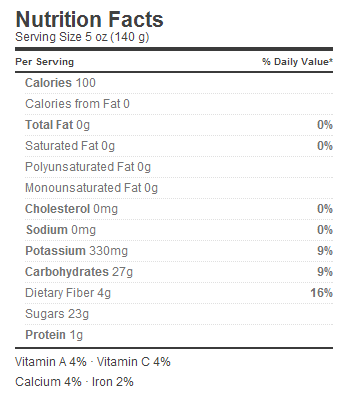
Trader Joe’s Organic Whole Green Figs – Nutrition Facts
Trader Joe’s Beef Pho Soup with Rice Noodles and Vegetables
Posted: July 31, 2014 Filed under: Soup, Trader Joe's Brand | Tags: 1 star, beef soup, pho, soup, Trader Joe's, vietnamese food Leave a comment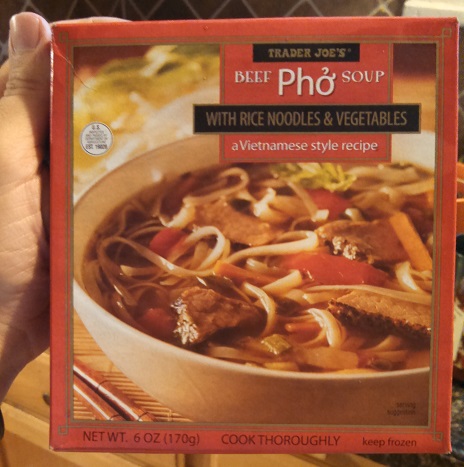
That doesn’t look too bad… right?
You usually can’t go wrong with food at Trader Joe’s. When they recently missed the mark with their Low-Fat Chicken Chow Mein I didn’t expect to run into trouble again, so soon, with another Asian, noodle-based dish. However, here we are. Trader Joe’s Beef Pho Soup is a total let down across the board and should be studiously avoided.
The flip side of delivering such high-quality results, time and time again, is that you set the bar high. Even in Trader Joe’s frozen food aisle, I expect anything I pick up to be better than average. That’s something to be proud of, but it makes your failures absolutely shocking by comparison. This beef pho soup is one such failure.
Before I go any further, it’s probably necessary to clarify that “pho” is pronounced “f’uh” not “fo”. It’s simple fact, but one that some pho shops – such as the Beverly Hills based “9021-Pho” – get wrong, while other shops – such as “Pho King” – get so, so right.
Pho, for those of you who have yet to enjoy it, is a hearty Vietnamese noodle soup – generally served in the largest soup bowls that you’re ever likely to see. In fact, I’m not sure I’ve ever seen someone drain an entire bowl of pho in one sitting. There are many, many variations on the soup, but all of them feature the same basic template – a clear broth (usually chicken or beef) heavily spiced with clove, star anise, coriander seed, fennel, cinnamon, black cardamom, ginger and onion, a hearty portion of rice noodles and some sort of meat (again, usually beef or chicken – though any meat can be used). Pho is then served piping hot with a heaping plate of traditional garnishes, such as chili peppers, cilantro, lime, bean sprouts, and Thai basil.
Grappling with the mountain of sprigs and garnishes, is part of the fun of eating a pho. It’s an Asian dish that retains something of it’s cultural uniqueness, despite it’s adoption on American shores. It’s a simple dish with complex underpinnings, yet the many restaurants I’ve enjoyed it at have all, without exception, delivered a hearty, spicy, and most of all delicious dining experience.
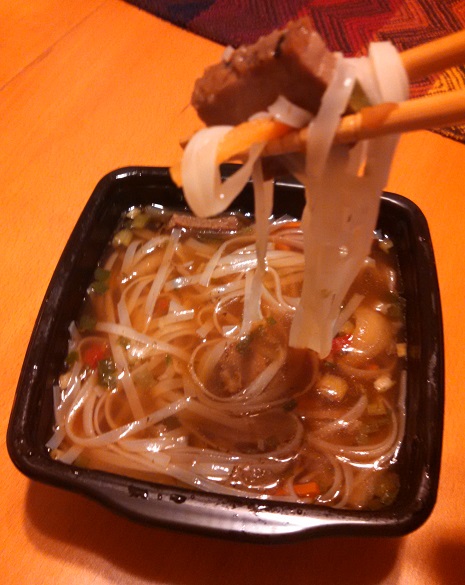
Surely that will be edible… won’t it?
So it’s really, really shocking that Trader Joe’s fails to achieve what the dingiest, strip mall pho house can nail. The problems with Trader Joe’s take on pho are numerous, but it boils down to the fact that their pho is bland. So bland. Bland and limp. Bland, limp and lifeless. Conceptually, it’s like eating a gruel made out of C- report cards. I don’t know how you could decide to make a pho but forget to put any of the spices in, but Trader Joe’s has done it.
The first mistake I made was heating the dish up. In its frozen form, Trader Joe’s Beef Pho looks clever and smells appetizing. The marbled beef cubes look intriguing, the frozen noodles look elegant, and the scent of spices, while not strong, still suggests the fragrant, green richness of a true pho.
It’s really a huge a surprising let down, then, when you heat it up and everything goes limp and flavorless. From the bland broth to the thin, flavorless noodles, to the limp, mushy vegetables, there is literally nothing to recommend this soup. Trader Joe’s tries to cover up for it’s deficiencies by urging you to “add a squeeze of lime” on the box, but it would take far more than that to turn this pho around.
If you enjoy pho, you’ll want to avoid this soup and try any of Trader Joe’s other wonderful, delicious Asian cuisine options. If you’ve never had pho before, you’ll also want to avoid it. Instead, look for literally any pho restaurant in your town and eat there instead. Unless a gas main ruptures explosively while you’re in the building, it’s guaranteed to be a better experience.
The Breakdown
Would I Recommend It: Only to jailers looking for ways to further erode the human spirit.
Would I Buy It Again: I’ll by the dehydrated kimchi before I buy this.
Final Synopsis: The only truly bad pho I’ve ever had.
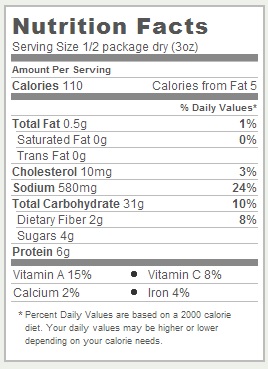
Trader Joe’s Beef Pho Soup – Nutrition Facts
Trader Joe’s Dark Chocolate Edamame
Posted: July 29, 2014 Filed under: Candy, Chocolate, edamame, Snacks, Vegetables | Tags: 3 stars, dark chocolate, Edamame, semi-sweet chocolate, soybeans 2 Comments
You’re calling this dark chocolate? C’mon now, be honest.
People are willing to put dark chocolate on just about anything. While I applaud the adventerous spirit, the problem is that dark chocolate is not so universal as people hope. Just because the word “chocolate” is in there doesn’t mean it’s a confection. The strong, bitter, almost astringent taste, of a high purity dark chocolate is an acquired taste and should be introduced into a dish only with forethought. Thus it was with trepidation that I picked up Trader Joe’s Dark Chocolate Covered Edamame.
I like dark chocolate, or at least I want to like dark chocolate. I certainly like it enough on its own. The trouble is, it’s hard to find it done right. One place I seem to continually encounter it is on roasted coffee beans, which has always truck me as very strange. Obviously coffee is a good thing. Coffee keeps America running. I, for one, recently fell in love with Trader Joe’s Cold Brewed Coffee Concentrate. However coffee beans are not coffee. They are the cast off husk that we extract that essential nectar from – the thing that gets in the way between us and the coffee. Why then does it seems to anyone likea good idea to cover the whole beans and eat them? It’s not like we eat them in any other way – nobody is throwing a handful of roasted coffee beans on their salad, or mixing them into their pasta. We grind them up and make coffee out of them or, in extreme cases, add it to steak rubs. We don’t just munch them down whole.
I bring this up because Trader Joe’s Dark Chocolate Edamame are essentially an improved form of the chocolate covered coffee bean. There’s a shell of dark chocolate around a crunchy, munchable core of dry roasted edamame. What’s surprising to me is that really these things are pretty good.
“Now wait a minute”, you’re probably thinking.”Aren’t edamame just soybeans?” Yes, that’s true – but don’t let the rather long history of soybean bashing turn you against me right from the start. It’s true that soy beans are mostly used to make salty and savory dishes – for example, as soy sauce, miso soup, and tofu. However, anyone who’s ever had a bowl of salted, fresh soybeans at a bar or as finger food, served still in the their little green pods, knows that they also have a very mild taste with an addicting crunchiness.
The truth is, you’ll barely taste the edamame beans in Trader Joe’s Dark Chocolate Edamame at all. They could have just as well called these Trader Joe’s Dark Chocolate Crunchers. The flavor of the heavy, dark chocolate coating is so strong that you don’t get any taste from the dry roasted soybeans at all. All you get is texture – the crunchy body and satisfying grist of the light, sere bean. The added benefit is that this snack actually has a pretty good protein content. A 1/4 cup serving contains 7 grams of protein – 49 grams in the whole container.
The other thing that Trader Joe’s did right with their dark chocolate edamame is not actually using dark chocola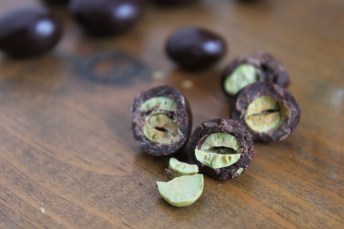 te at all. Seriously. A
quick inspection of the ingredients reveals only a mention of “semi-sweet” chocolate. Semi-sweet is a far cry from dark chocolate, sometimes containing as little as 35% cocoa. Trader Joe’s doesn’t state the percent of cocoa in these beans, but a safe bet might be around 50%.
Normally I decry this sort of misleading wordplay, but in this case I’m actually not that upset. For one, semi-sweet chocolate is still “technically” considered dark chocolate, even if it wouldn’t necessarily be considered as such in the vernacular. Secondly, and more importantly, it’s actually a good move. Dark chocolate tends to be unpalatable quickly as the purity increases. By going with a semi-sweet dark chocolate, Trader Joe’s has succeeded in making a eminently snackable chocolate treat perfect for setting out at bridge groups, high caliber sporting events, and other informal social gatherings. A chocolate treat that isn’t too sweet, or too bitter.
The Breakdown
Would I Recommend It: Yes, this is a fine use of dark chocolate.
Would I Buy It Again: Sure, I could see putting this out for guests.
Final Synopsis: Semi-sweet chocolate beans with a pleasantly crunchy center.
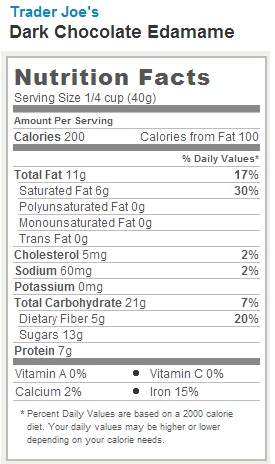
Trader Joe’s Dark Chocolate Edamame – Nutrition Facts
Trader Joe’s Chicken Gyoza Pot Stickers
Posted: July 24, 2014 Filed under: Chicken, Frozen Food, Meat, Trader Joe's Brand | Tags: 4 stars, chicken dumplings, chinese food, dumplings, gyoza, japanese food, potstickers 6 Comments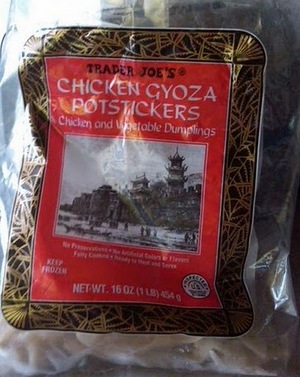
Frozen, chicken filled happiness.
We continue our look at Trader Joe’s frozen Chinese-insipired food with Trader Joe’s Chicken Gyoza Pot Stickers. Unlike the Chicken Chow Mein from the other day, I like these gyoza just fine. In fact, I have a nearly bottomless stomach for a good gyoza, and Trader Joe’s certainly manages to deliver. I crammed hundreds of these savory dumplings into my face in Japan, and I’ll cram hundreds more if given the chance. Where the chow mein clearly lacked any sort of passion in it’s execution, these gyoza were made by a true believer. Despite coming to you frozen, these little dumplings are nearly as good as the real thing and, even better, seem to cook up perfectly every time.
There’s something wonderful that happens to mince meat and vegetables when they’re put inside the thin, crimped skin of a gyoza dumpling. Trader Joe’s combination of rich and flavorful chicken with minced vegetables combines brilliantly with the smooth, almost creamy texture of the tender skin. Whether pan fried or steamed, the gyoza seal in the flavors, keeping the insides moist and tender.
The name gyoza is directly taken from the Japanese, but that name is as meaningless to them as it is to us. The Japanese took both the name and idea from Northern China where gyoza go by the name giaozi or jioazi. Their true origin is obscured by the hazy reaches of history, but seems to owe their creation to Zhang Zhongjing – a legendary figure in Chinese history and the most prominent physician of the year 200 AD – as some sort of medical treatment.
The name Mr. Zhang bestowed upon his creation, jiaozi, translates literally “tender ears”. This is not, as you might expect, because of the lumpy, oblong shape of gyoza makes them look a somewhat ear-like. Instead, historic record suggests they were used to treat frostbitten ears. Whether this means that they were supposed to be fed to a person with frostbitten ears as a sort of medicine, or strapped directly to the head in order to warm the damaged extremities is unknown, as Zhang’s original texts were lost during the ravages of the Three Kingdoms period.
Medical use aside, the other big gyoza question is – what’s the difference between these things and Trader Joe’s equally delicious wantons?
While outwardly similar, the wanton is usually rounder than the gyoza, with a somewhat thinner skin and more heavily seasoned filling. When steamed, the differences between gyoza and wantons are more academic than anything – it’s when you pan-fry your gyoza that the differences really show up. A good pan-fried gyoza turns toasty brown on one-side while steaming up on the other. The result is a spectrum of textures, from crispy to soft, to add another dimension to the meaty filling.
Of course, no good potsticker would be complete without a killer dipping sauce. A simple mixture of soy sauce and vinegar (I like a 1:2 ration) elevates this humble dumpling to surprisingly levels of flavor and melt in your mouth pleasure. Ideally, you should use a mild rice vinegar, but any vinegar will work.
It’s a winning combination in my book, and a flawless execution of a delicious and versatile food that can be eaten as a side dish or main course. Trader Joe’s should be proud – they’ve done the gyoza proud.
The Breakdown
Would I Recommend It: Yes – they’re perfect for entrees or sides.
Would I Buy It Again: I’m hooked.
Final Synopsis: Authentic tasting gyoza that cook up fantastically.
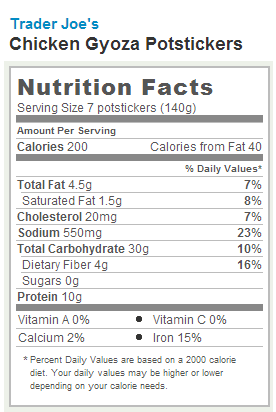
Trader Joe’s Chicken Gyoza Potstickers – Nutrition Facts
 Eating At Joes
Recent Comments